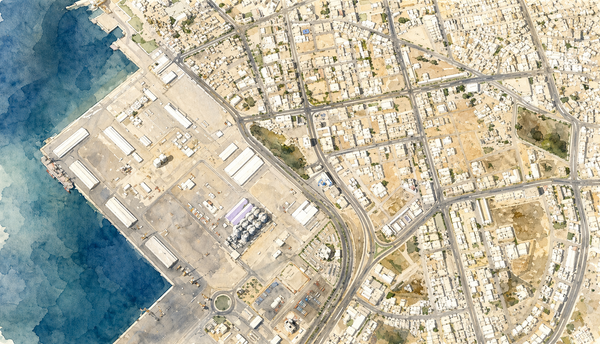
Tshwane
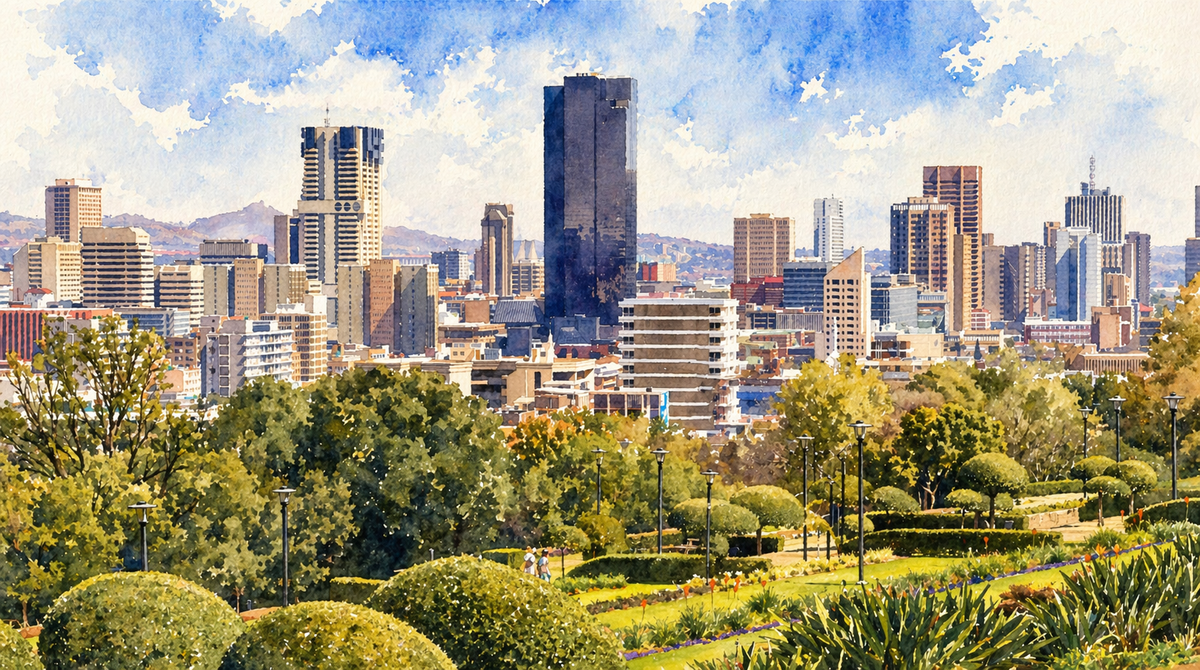
Tshwane, home to South Africa’s administrative capital, Pretoria, is a rapidly growing metropolitan area balancing historic significance and modern urban development. As part of Gauteng province, Tshwane is a key hub for government, education, and industry, hosting diplomatic missions, universities, and automotive manufacturing plants. The city is expanding through infrastructure upgrades, transit-oriented development, and smart city initiatives. Projects like the Tshwane Rapid Transit system and revitalization of the inner city aim to improve mobility and economic inclusion. However, challenges such as urban sprawl, service delivery issues, and socio-economic disparities remain. With continued investment in housing, technology, and sustainable development, Tshwane is positioning itself as a modern, innovative African city, blending heritage with contemporary urban solutions.
Note: Tshwane is both an old and new city, making it distinct from completely greenfield developments like NEOM, Xiong’an, or Dholera. The City of Tshwane Metropolitan Municipality was officially formed in 2000, consolidating Pretoria and surrounding towns into a single metropolitan area. This makes it a new administrative entity, even though Pretoria itself dates back to the 19th century. Unlike master-planned cities built from scratch, Tshwane’s urban expansion involves retrofitting and integrating historic, suburban, and informal areas into a modern, functional metropolis. While it shares challenges with new cities, such as infrastructure expansion and economic growth, Tshwane’s development is more about regional integration than blank-slate urbanization.
Tshwane is best understood as an urban expansion. It did not emerge as a new, ground-up city, but rather evolved through the consolidation and outward growth of existing settlements anchored by Pretoria. The formation of the City of Tshwane Metropolitan Municipality reflects the merging of multiple towns, townships, and suburban areas into a single metropolitan entity. Its growth has been shaped by infrastructure, governance restructuring, and post-apartheid spatial integration efforts, rather than a singular master-planned vision. Unlike a large-scale district, it operates at full metropolitan scale, with diverse economic and residential areas. In this sense, Tshwane represents the expansion and restructuring of an existing urban system into a broader, more unified city-region.
Tshwane scores 72 out of 100 on the Momentum Index because it functions as a real, consequential city with enduring institutional weight, even if it is not a breakout example of transformative new-city realization. The metropolitan municipality, established in 2000, consolidated Pretoria and surrounding areas into a single large urban system, and it remains South Africa’s administrative capital and a major center of government, education, and research.
Its score is solid rather than spectacular because Tshwane’s strength lies in institutional gravity and economic substance, not explosive urban reinvention. It has genuine scale and significance, but also persistent service-delivery, inequality, and urban fragmentation challenges that keep it below the highest tier of fully realized city-building successes.
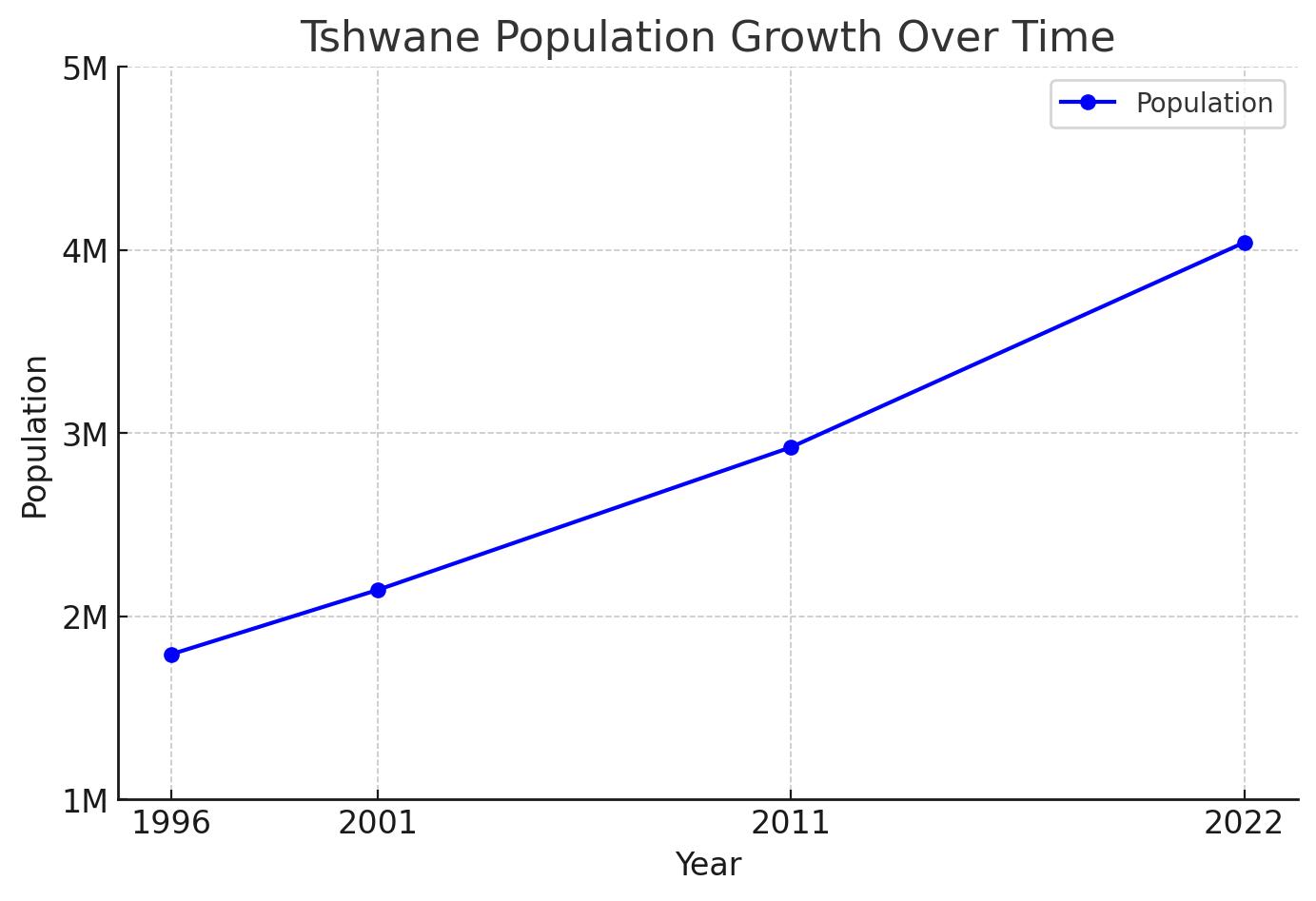
| Year | Population |
|---|---|
| 1996 | 1,792,851 |
| 2001 | 2,143,869 |
| 2011 | 2,921,488 |
| 2022 | 4,040,315 |
DISCLAIMER: The information presented across New Cities Atlas reflects approximate understandings of each city's development status, population figures, statistics, and trajectory, compiled from publicly available sources. It should not be taken as verified or definitive fact. New city developments are, by their nature, a moving target, and information is often scarce, frequently imprecise, and subject to rapid change as projects evolve, stall, accelerate, or are revised entirely. We are doing our best to build as comprehensive and accurate a picture as we can of a phenomenon that resists easy documentation, and we appreciate your understanding of the inherent limitations in that effort.
If you have up-to-date information about any of the cities featured here and would like to help us improve our coverage, we would genuinely welcome hearing from you. Reach us at newcitiesatlas@gmail.com.