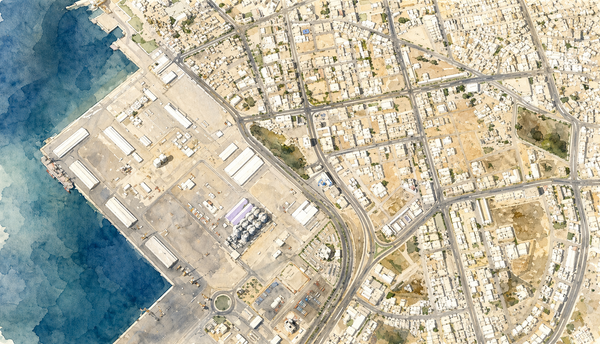
Phoenix Metro Data Center Ecosystem
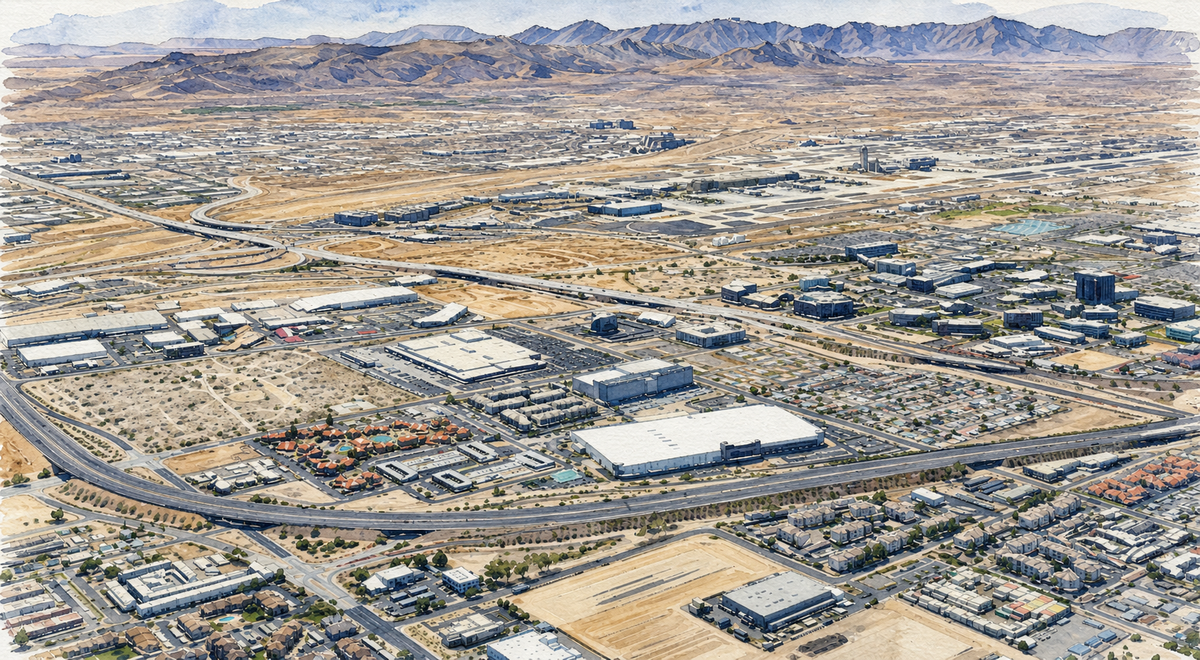
Core communities: Chandler, Mesa, Gilbert, Goodyear, Glendale, Peoria, Buckeye, Surprise, and parts of Queen Creek and Pinal County.
Metro Phoenix has emerged as one of the fastest-growing data center markets in the United States, transforming from a secondary regional node into a major destination for hyperscale and AI-driven infrastructure. Development has been especially concentrated in the East Valley (Chandler and Mesa) and increasingly in West Valley communities like Goodyear and Buckeye, where large tracts of land and access to power infrastructure have enabled rapid expansion. Unlike Northern Virginia’s dense, network-driven cluster or Atlanta’s distributed campus model, Phoenix is best understood as a Sun Belt growth market under environmental constraint, where the scale of development is accelerating even as resource limits become more visible.
The scale of data center development in Metro Phoenix is now firmly in the top tier of U.S. markets, with hundreds of megawatts delivered and gigawatt-scale capacity planned. However, it remains a growth-phase ecosystem, defined more by its trajectory than by entrenched network effects. Its rise reflects a broader geographic shift in digital infrastructure toward regions that can provide land, power, and speed, even if they lack legacy interconnection advantages.
Why Phoenix?
Phoenix’s emergence is driven by a combination of physical, economic, and regulatory factors.
The region offers abundant, relatively low-cost land, particularly in suburban and exurban areas where large campuses can be assembled. Its geographic location provides strong connectivity to Western U.S. markets, including California, while avoiding the cost and regulatory constraints of coastal regions.
Power availability, historically supported by utilities like Arizona Public Service and Salt River Project, has been a key enabler, along with a business-friendly environment and tax incentives targeted at data center investment.
Phoenix also benefits from relatively low risk of natural disasters compared to other regions, making it attractive for redundancy and backup infrastructure. At the same time, its rise is tied to a broader pattern: hyperscalers seeking geographic diversification and capacity outside of saturated core markets.
Major companies involved
The Phoenix market includes a mix of hyperscale and colocation players:
Hyperscale / cloud: Amazon Web Services, Microsoft, Google, Meta
Colocation / data center operators: CyrusOne, Digital Realty, QTS, Aligned, EdgeCore, Stack Infrastructure, Vantage
EdgeCore and Aligned have played particularly visible roles in large campus developments, especially in Mesa and Goodyear, while hyperscalers are steadily expanding their regional footprints.
Types
Metro Phoenix is dominated by large-scale, campus-style data center development, with a strong emphasis on hyperscale and AI-ready facilities.
The primary typology is multi-building hyperscale campuses, often located on hundreds of acres and designed for phased expansion. These facilities prioritize scale, power capacity, and long-term flexibility, rather than interconnection density.
AI-oriented data centers are becoming increasingly important, with higher power densities and more advanced cooling requirements shaping new development. These facilities are pushing infrastructure demands even further, particularly in terms of electrical load and site planning.
Colocation facilities exist but are not the defining feature of the market. Phoenix lacks the dense interconnection ecosystem of Northern Virginia, functioning instead as a capacity and distribution hub.
Most development is greenfield, with limited reliance on retrofitting existing buildings. The result is a landscape defined by purpose-built infrastructure campuses rather than incremental adaptation.
Most Significant Projects
The most important developments in Metro Phoenix are large-scale hyperscale campuses rather than dense clusters.
Mesa has become a focal point, with multiple major campus developments by companies like Meta and Apple (including supporting infrastructure), as well as large-scale projects by developers like EdgeCore.
Chandler continues to host significant data center activity, building on its existing tech and semiconductor ecosystem.
In the West Valley, Goodyear and Buckeye are emerging as major growth areas, attracting large campus developments due to land availability and infrastructure access.
These projects collectively define Phoenix’s role as a high-capacity, distributed infrastructure market, rather than a single concentrated hub.
How are these communities being affected?
Data center development in Metro Phoenix is reshaping suburban growth patterns, particularly in fast-growing areas like Chandler, Mesa, and Goodyear.
Local governments have generally embraced data centers as a source of tax revenue and economic diversification. These facilities provide significant capital investment and fiscal benefits, often with relatively low service demands compared to residential growth.
However, the scale of land consumption is becoming more apparent. Large parcels that might otherwise support housing or mixed-use development are being converted into single-use infrastructure campuses, influencing long-term development patterns in rapidly growing areas.
The physical presence of data centers, large, inward-facing buildings with extensive security and limited public interface, is also beginning to shape the character of these communities, particularly as clusters form along key corridors.
Community Issues
Community concerns in Phoenix are centered more on resource constraints than land use conflict, reflecting the region’s environmental context.
The most significant issue is water. Data center cooling systems, combined with the broader demands of rapid population growth, have intensified concerns about long-term water availability in an arid region. While data centers are not the largest water users, they are highly visible participants in a broader resource debate.
Energy demand is another major concern. The rapid growth of hyperscale and AI facilities is placing increasing pressure on the electrical grid, requiring new generation and transmission infrastructure.
Land use issues are present but less contentious than in Northern Virginia, due to the region’s greater availability of land. However, as development continues, questions about opportunity cost and land allocation are becoming more prominent.
Noise and environmental concerns exist but remain secondary, though they are likely to grow as facilities move closer to residential areas.
Regulatory Hurdles
Phoenix’s regulatory environment has historically been supportive, but is beginning to evolve in response to scale and resource concerns.
Water policy is emerging as the most critical regulatory issue. State and local authorities are increasingly focused on groundwater management and long-term water supply, which could influence future data center approvals and operating conditions.
Energy infrastructure is also becoming more complex, with utilities needing to plan for large, concentrated loads and associated grid upgrades.
Local governments are beginning to introduce more detailed requirements around site design, water usage, and infrastructure coordination, though these remain less restrictive than in more mature markets.
Overall, Phoenix is transitioning from a highly permissive growth environment to one where resource constraints are shaping regulatory decisions.
Metro Phoenix's score reflects its position as one of the country’s most dynamic and rapidly expanding data center markets. The region demonstrates strong growth velocity and increasing economic gravity, driven by hyperscale and AI demand, abundant land, and a favorable development environment. However, it lacks the deep network effects and interconnection density of more mature clusters, and its long-term trajectory is shaped by significant resource constraints, particularly around water and energy. Community alignment remains relatively strong but is increasingly influenced by environmental concerns, while governance is beginning to shift toward more structured oversight. Phoenix’s future resilience is closely tied to how effectively it manages these constraints, positioning it as a high-momentum market with a more uncertain long-term ceiling.
Trajectory
Metro Phoenix is likely to remain a major growth market for data centers, particularly as demand for AI and cloud infrastructure continues to expand.
The region’s ability to provide land and capacity will continue to attract investment, but its trajectory will increasingly be shaped by water availability, energy infrastructure, and environmental policy.
Growth is expected to continue in both the East and West Valley, with development spreading outward along major infrastructure corridors. Over time, Phoenix may evolve into a more integrated regional network, though it is unlikely to replicate the dense interconnection model of Northern Virginia.
The defining question for Phoenix is whether it can sustain its rapid growth while managing the environmental constraints inherent to its geography. The answer to that question will determine whether it remains a leading expansion market or faces limits that redirect growth elsewhere.
DISCLAIMER: The information presented across New Cities Atlas reflects approximate understandings of each city's development status, population figures, statistics, and trajectory, compiled from publicly available sources. It should not be taken as verified or definitive fact. New city developments are, by their nature, a moving target, and information is often scarce, frequently imprecise, and subject to rapid change as projects evolve, stall, accelerate, or are revised entirely. We are doing our best to build as comprehensive and accurate a picture as we can of a phenomenon that resists easy documentation, and we appreciate your understanding of the inherent limitations in that effort.
If you have up-to-date information about any of the cities featured here and would like to help us improve our coverage, we would genuinely welcome hearing from you. Reach us at newcitiesatlas@gmail.com.