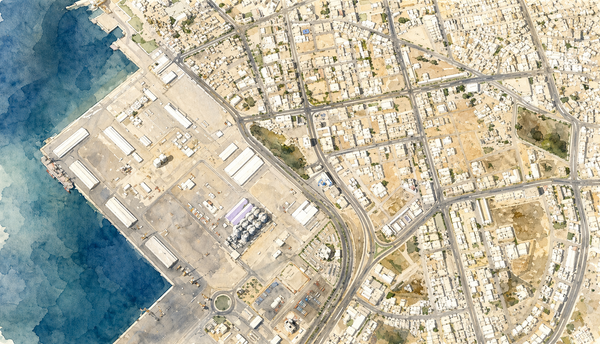
New York / Northern New Jersey Data Center Ecosystem
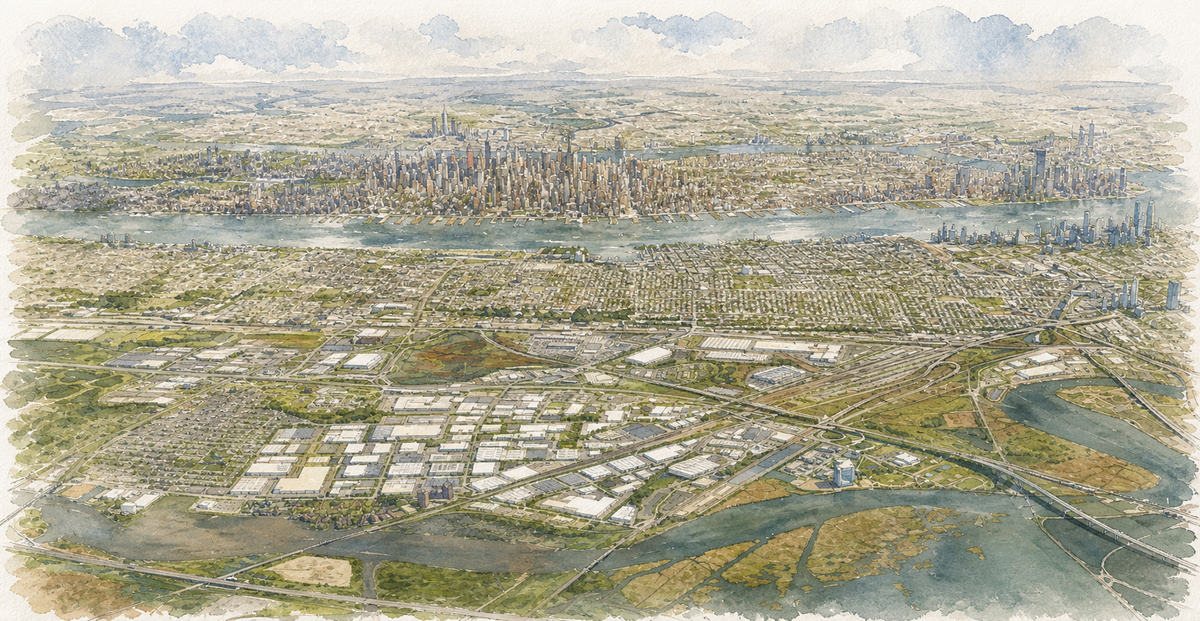
Core communities: Secaucus, Weehawken, Jersey City, Newark, Clifton, Piscataway, Carteret, and extending into Hudson, Essex, Union, and Middlesex Counties.
The Northern New Jersey data center market functions as the primary digital edge of the New York metropolitan economy, anchoring one of the most important low-latency and interconnection ecosystems in the world. Unlike Northern Virginia’s hyperscale dominance or Dallas–Fort Worth’s land-driven expansion, Northern New Jersey is defined by proximity, latency, and irreplaceability, serving as the critical infrastructure layer for finance, media, and enterprise systems tied to New York City. Development is tightly constrained geographically, with facilities embedded within dense industrial and urban corridors rather than expansive suburban campuses.
This is not a growth-at-all-costs market. It is a high-value, capacity-constrained system, where each facility plays an outsized role relative to its physical footprint.
The scale of data center development in Northern New Jersey is smaller in absolute terms than markets like Northern Virginia, Dallas-Fort Worth, or Phoenix, but its functional importance far exceeds its physical footprint. While those markets are defined by multi-gigawatt campuses and rapid outward expansion, Northern New Jersey operates as a high-density, high-value edge market, where capacity is limited but strategically critical. It is not a place where the bulk of new data center capacity is built, but rather where the most latency-sensitive and economically valuable connections occur. In that sense, it is less comparable to large-scale growth markets and more akin to a critical node within the national and global digital network, making it indispensable despite its constrained scale.
Why Northern New Jersey?
The region’s importance is driven by its direct relationship to New York City and its position within global financial and media networks.
Northern New Jersey provides the closest viable location for large-scale data center infrastructure serving Manhattan, offering slightly lower costs and more available land while maintaining extremely low latency connections. This is essential for industries like financial trading, where milliseconds matter.
The region also benefits from dense fiber infrastructure, proximity to subsea cable landing points, and access to a massive concentration of enterprise demand. Utilities such as Public Service Enterprise Group and Con Edison support a complex but highly reliable power environment.
Unlike emerging markets, Northern New Jersey is not competing on land or incentives. It is competing on location and necessity.
Major companies involved
The Northern New Jersey market includes a mix of hyperscale, enterprise, and interconnection-focused operators:
Hyperscale / cloud: Amazon Web Services, Microsoft, Google
Colocation / data center operators: Equinix, Digital Realty, CoreSite, Iron Mountain, CyrusOne
Equinix’s Secaucus campus is one of the most important interconnection hubs in the world, particularly for financial networks.
Types
Northern New Jersey is defined by high-density, latency-sensitive data center typologies, rather than large campus developments.
At the core are interconnection-rich colocation facilities, where financial institutions, carriers, and cloud providers co-locate infrastructure to minimize latency. These environments are highly networked and densely packed, prioritizing connectivity over scale.
There are also enterprise and financial trading data centers, specifically designed to support ultra-low-latency operations. These facilities are among the most performance-sensitive in the world.
Hyperscale cloud presence exists but is more limited and often distributed, reflecting the constraints of land and power.
Greenfield campus development is rare. Most facilities are either purpose-built on constrained sites or adapted from industrial properties, resulting in a compact and highly optimized infrastructure landscape.
Most Significant Projects
The most important assets in Northern New Jersey are interconnection hubs and high-value facilities rather than large campuses.
Equinix’s Secaucus campus is one of the most critical nodes in global financial networks, supporting ultra-low-latency connectivity.
Digital Realty and CoreSite facilities across the region provide essential infrastructure for enterprise and cloud connectivity.
New developments in areas like Piscataway and Carteret represent incremental expansion, rather than large-scale transformation.
The region’s significance lies in the concentration and importance of its infrastructure, not its physical footprint.
How are these communities being affected?
Data centers in Northern New Jersey are deeply integrated into existing industrial and urban environments, reinforcing the region’s role as a critical infrastructure zone for the global economy.
Communities benefit from tax revenue and investment, though the impact is less transformative than in emerging markets because development occurs within already urbanized areas.
The presence of data centers helps sustain industrial land uses and supports the broader economic ecosystem tied to New York City, particularly in finance and media.
However, the integration of large infrastructure facilities into dense environments also creates localized impacts on land use, traffic, and urban form.
Community Issues
Community concerns in Northern New Jersey are shaped by density and proximity rather than scale.
Power demand is a major issue, particularly given the already high baseline demand in the New York metro area. Expanding capacity requires complex upgrades to an already constrained grid.
Land use conflicts are significant due to limited availability. Data centers compete with logistics, residential, and commercial development in some of the most valuable land markets in the country.
Noise, visual impact, and environmental concerns are more acute due to proximity to residential areas, even if the overall scale of facilities is smaller than in suburban markets.
There is also sensitivity around the concentration of critical infrastructure, particularly in flood-prone or climate-vulnerable areas.
Regulatory Hurdles
The regulatory environment in Northern New Jersey is complex and highly layered.
Development must navigate local zoning, state-level environmental regulations, and utility coordination, all within a dense and constrained physical environment.
Power infrastructure is the most significant hurdle, with limited capacity and high costs associated with upgrades.
Permitting processes can be lengthy, particularly for projects requiring significant electrical infrastructure or environmental review.
Unlike more permissive markets, Northern New Jersey requires precision and negotiation, rather than speed, to deliver projects.
Northern New Jersey / NYC Metro's score reflects its position as a highly mature, high-value, but capacity-constrained data center market. The region benefits from exceptional economic gravity, driven by its proximity to New York City and its role in global finance and enterprise networks. While growth velocity is moderate compared to Sun Belt markets, its strategic importance is unmatched in latency-sensitive applications. Its urban integration is high, though often challenging, and community alignment is mixed due to land and infrastructure pressures. Regulatory complexity and power constraints limit expansion, but long-term demand ensures continued relevance. The market’s strength lies in its indispensability rather than its scalability.
Trajectory
Northern New Jersey will remain a critical edge infrastructure market, defined by its proximity to New York City and its role in global networks.
Growth will continue incrementally, with new facilities added where land and power allow, but large-scale expansion is unlikely.
The key challenges will revolve around power capacity, land constraints, and climate resilience, particularly in low-lying areas.
The region’s future is not about becoming larger, but about remaining essential, maintaining its position as one of the most important and irreplaceable data center markets in the world.
DISCLAIMER: The information presented across New Cities Atlas reflects approximate understandings of each city's development status, population figures, statistics, and trajectory, compiled from publicly available sources. It should not be taken as verified or definitive fact. New city developments are, by their nature, a moving target, and information is often scarce, frequently imprecise, and subject to rapid change as projects evolve, stall, accelerate, or are revised entirely. We are doing our best to build as comprehensive and accurate a picture as we can of a phenomenon that resists easy documentation, and we appreciate your understanding of the inherent limitations in that effort.
If you have up-to-date information about any of the cities featured here and would like to help us improve our coverage, we would genuinely welcome hearing from you. Reach us at newcitiesatlas@gmail.com.