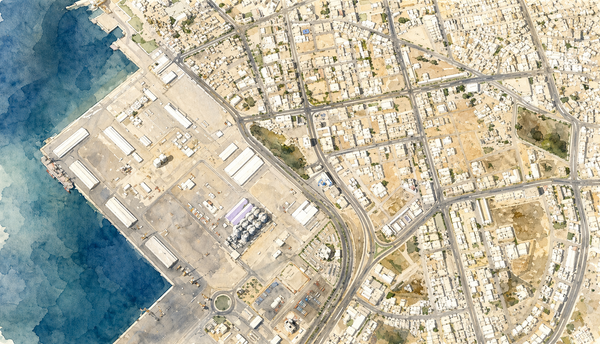
Tianjin Economic Development Area (TEDA)
In 1984, China was still in the earliest days of figuring out what it wanted to be. Deng Xiaoping had cracked the door open to foreign investment and market economics, but nobody quite knew how far the experiment would go or what it would produce. TEDA, the Tianjin Economic-Technological Development Area, was one of the first serious answers to that question. Planted in what was then largely undeveloped coastal land in Tianjin's Binhai district, it was a bet that if China built the infrastructure, streamlined the bureaucracy, and made the terms attractive enough, the world's manufacturers would come. They came.
Four decades later, TEDA is one of the more quietly impressive industrial success stories on the planet. Samsung, Toyota, Airbus, the roster of global manufacturers that have set up operations there reads like a who's who of the industries that defined the second half of the twentieth century. Tianjin Port, one of the largest in the world, sits close enough to make the logistics equation work for companies moving goods in serious volumes. The zone has since pushed beyond its manufacturing origins into finance, biotech, and green energy, tracking China's own ambitions as the country has tried to trade its reputation as the world's factory floor for something with higher margins and longer staying power.
The harder question is whether TEDA is a model for China's future or a monument to its recent past. The overcapacity problems that have plagued Chinese industrial zones broadly have not spared it. Real estate speculation has complicated the picture. And as China strains to make the transition from a manufacturing and export-driven economy to one built on services and technology, zones like TEDA find themselves at an awkward inflection point: tremendously successful at doing the thing they were built to do, in an era when China is trying to do something different. What TEDA becomes in the next forty years will say as much about China's economic evolution as what it built in the last.
The Tianjin Economic Development Area (TEDA) is not a new city, but rather a district within Tianjin, China. Established in 1984 as one of China’s first Special Economic Zones (SEZs), TEDA was designed to attract foreign investment, promote industrialization, and serve as a key economic and commercial hub in northern China.
TEDA has evolved into a high-tech industrial zone and a center for manufacturing, logistics, and finance, but it remains administratively part of Tianjin, one of China’s major cities. While TEDA has been developed with modern infrastructure, business parks, and residential areas, it functions more as a district or industrial park rather than an independent, self-sustaining new city. And it has many unfilled pieces and is mostly quiet after dark.
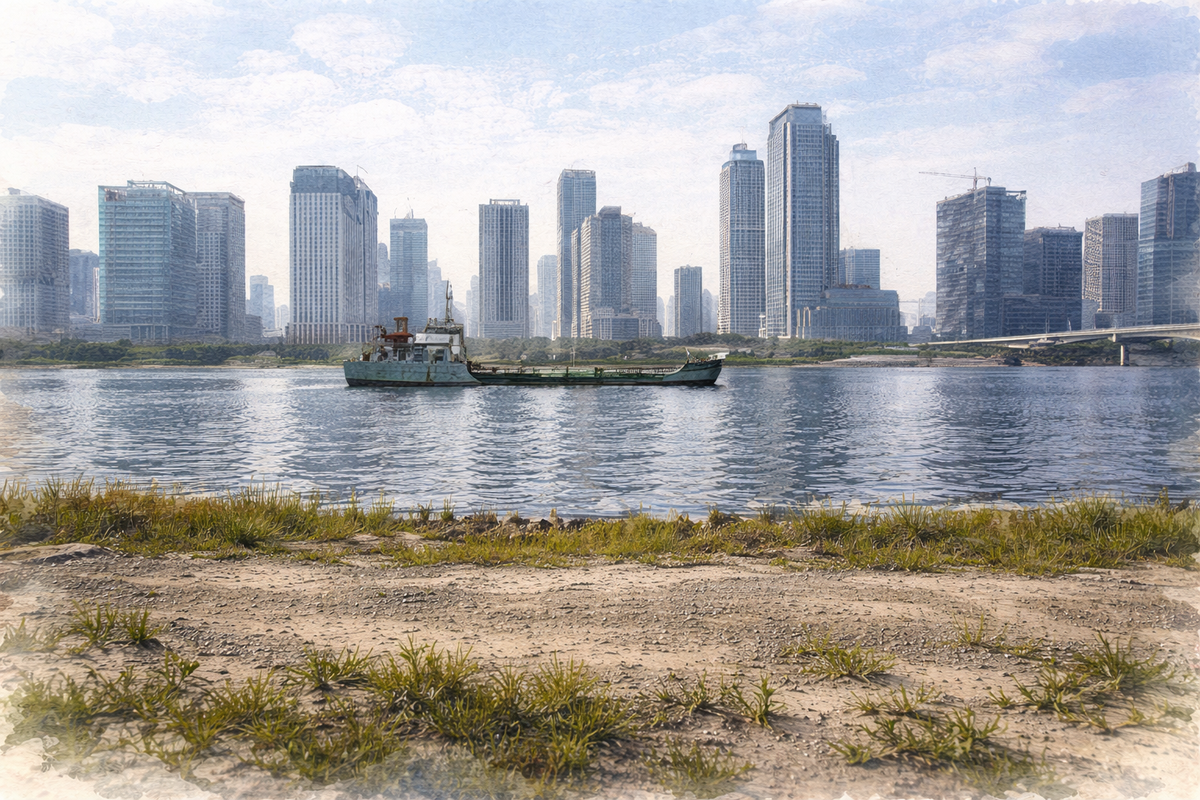
TEDA’s situation is a bit complex. While some parts of the broader Binhai New Area have struggled to reach full occupancy, particularly in residential developments like Yujiapu, the core industrial zones of TEDA are far from empty. In fact, TEDA is still home to a wide array of active manufacturing plants, tech companies, and logistics operations, making it one of China’s most successful long-running development areas. While its situation is mixed, TEDA has sustained its status as a powerhouse of economic development and industrial innovation for decades. While it faces modern challenges, its strong infrastructure, diverse industries, and continued government backing make it a moderately successful economic zone in China.
Strengths:
- One of China’s Most Successful Development Zones: Established in 1984, TEDA quickly became one of the most prominent and enduring economic zones in China, serving as a model for similar initiatives nationwide.
- Strong Economic Foundation: TEDA is home to major multinational corporations, high-tech firms, and advanced manufacturing plants, attracting significant foreign direct investment (FDI) and driving sustained economic growth.
- World-Class Infrastructure: The area boasts modern transportation networks, including proximity to Tianjin Port, a well-developed urban layout, and access to high-speed rail and expressways.
- Diverse Industrial Base: TEDA’s economy includes automotive manufacturing, electronics, pharmaceuticals, and renewable energy, ensuring a diverse and resilient economic profile.
- Consistent Government Support: Over the decades, TEDA has benefited from stable government policies, tax incentives, and infrastructure funding, allowing it to maintain momentum.
Challenges:
- Competition from Newer Zones: As newer development areas emerge across China, TEDA faces increased competition for investment, talent, and global attention.
- Environmental Concerns: Rapid industrialization has raised environmental challenges, and ensuring long-term sustainability will require ongoing investments in cleaner technologies and ecological restoration.
- Pressure to Adapt to Changing Markets: With shifts in global manufacturing and China’s move toward a consumption-driven economy, TEDA must continue evolving to remain relevant.
| Year | Event | Population Estimate |
|---|---|---|
| 1984 | Establishment of TEDA | N/A |
| 1997 | TEDA ranked first among national development zones | N/A |
| 2004 | Completion of TEDA Football Stadium | N/A |
| 2014 | TEDA celebrated its 30th anniversary | N/A |
| 2019 | TEDA marked 35 years of development | N/A |
DISCLAIMER: The information presented across New Cities Atlas reflects approximate understandings of each city's development status, population figures, statistics, and trajectory, compiled from publicly available sources. It should not be taken as verified or definitive fact. New city developments are, by their nature, a moving target, and information is often scarce, frequently imprecise, and subject to rapid change as projects evolve, stall, accelerate, or are revised entirely. We are doing our best to build as comprehensive and accurate a picture as we can of a phenomenon that resists easy documentation, and we appreciate your understanding of the inherent limitations in that effort.
If you have up-to-date information about any of the cities featured here and would like to help us improve our coverage, we would genuinely welcome hearing from you. Reach us at newcitiesatlas@gmail.com.