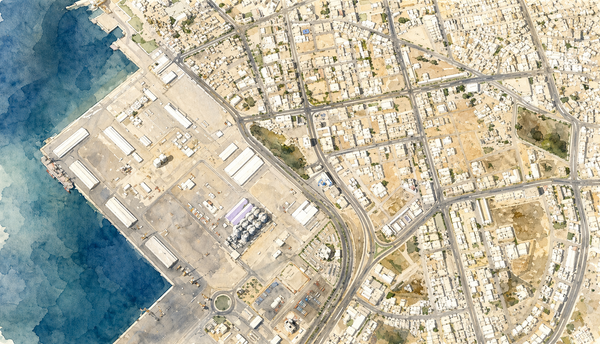
Sino-Singapore Tianjin Eco-City
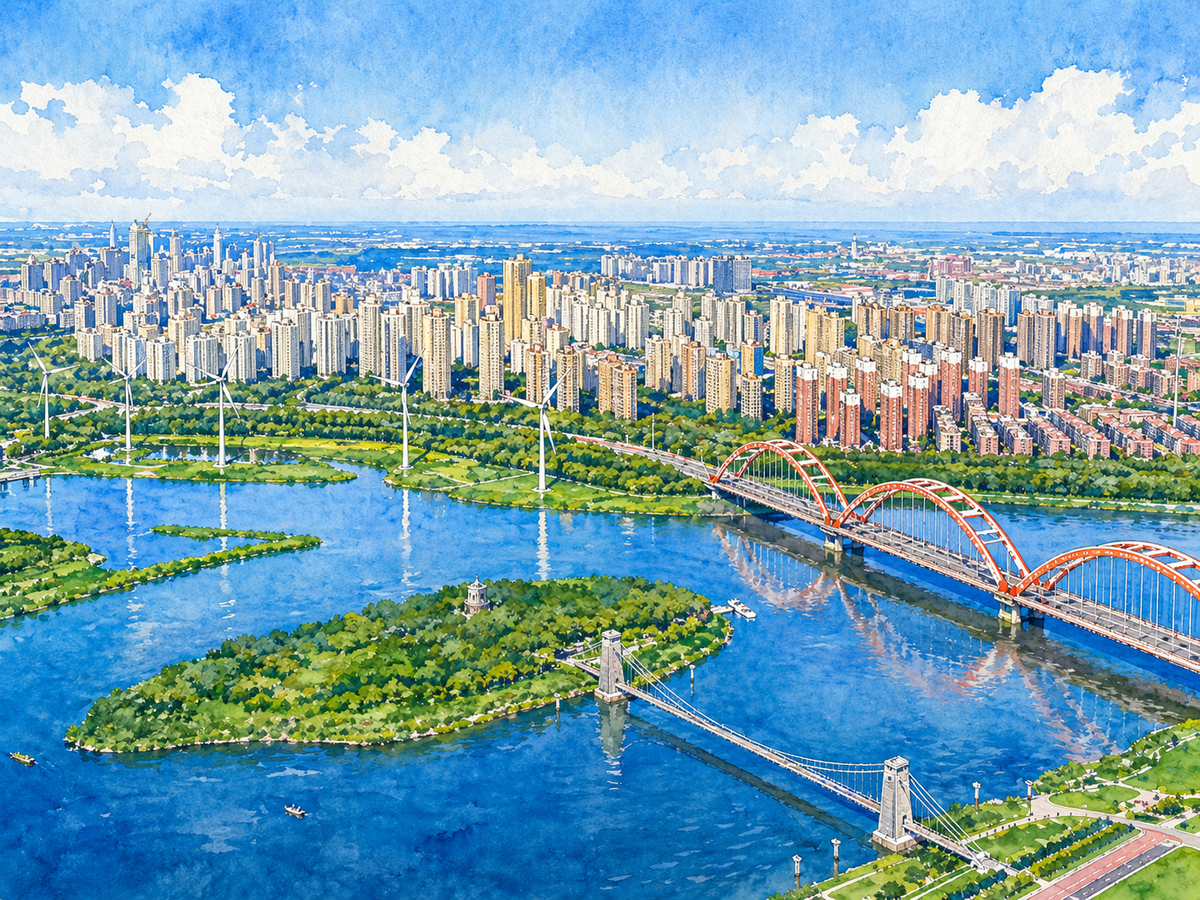
The Sino-Singapore Tianjin Eco-City is a flagship green urban development, jointly developed by China and Singapore to showcase sustainable city-building. Located in Tianjin’s Binhai New Area, it spans 30 square kilometers and aims to house 350,000 residents. Designed as a model for low-carbon, resource-efficient urbanization, it features renewable energy, green buildings, smart water management, and extensive public transport. Despite early skepticism about its feasibility, the Eco-City has gradually attracted businesses, residents, and international attention as a testbed for environmental innovation. Challenges include market demand, affordability, and ensuring long-term economic viability. While not yet a fully realized vision, it represents a significant effort in China’s push toward sustainable urbanization and high-quality, livable green cities.
Sino-Singapore Tianjin Eco-City is a new city, not just a district. Located in Tianjin, China, it was developed as a collaborative project between China and Singapore, with the goal of creating a sustainable, environmentally friendly urban area. Launched in 2008, the city is designed to integrate green technologies, energy-efficient infrastructure, and eco-friendly living into a modern urban environment. It is built on 1,300 hectares of land and is designed to accommodate 350,000 residents.
Unlike a district, which would be an extension of an existing city, the Tianjin Eco-City is a self-contained new urban development, with its own infrastructure, governance, and planning. Its focus on sustainability and smart city technologies makes it a distinct new city rather than a district within Tianjin.
Tianjin Eco-City is not a failure, but not a breakout success either. It has achieved population growth and remains an active development, but its slow pace and limited economic dynamism prevent it from reaching "Rapid Rise" status.
Strengths:
- Strong Government & International Backing – A joint project between China and Singapore, this eco-city had strong state-level planning and execution.
- Sustainability Leadership – Designed as a global model for sustainable urbanism, with smart grids, water recycling, green buildings, and renewable energy integration, but a bit dated now.
- Population Growth & Basic Urban Functionality – Unlike some failed eco-city experiments, Tianjin Eco-City has attracted residents and businesses, showing some level of success.
Challenges:
- Slower-than-Planned Growth – While it is inhabited, the pace of urbanization has been much slower than expected, with parts of the city still feeling empty.
- Limited Economic Appeal – Despite a sustainability focus, it hasn’t become a major economic hub, and incentives were needed to attract businesses and residents.
- Comparison to Nearby Tianjin – Being so close to the much larger and established city of Tianjin, the eco-city has struggled to differentiate itself and sustain independent momentum.
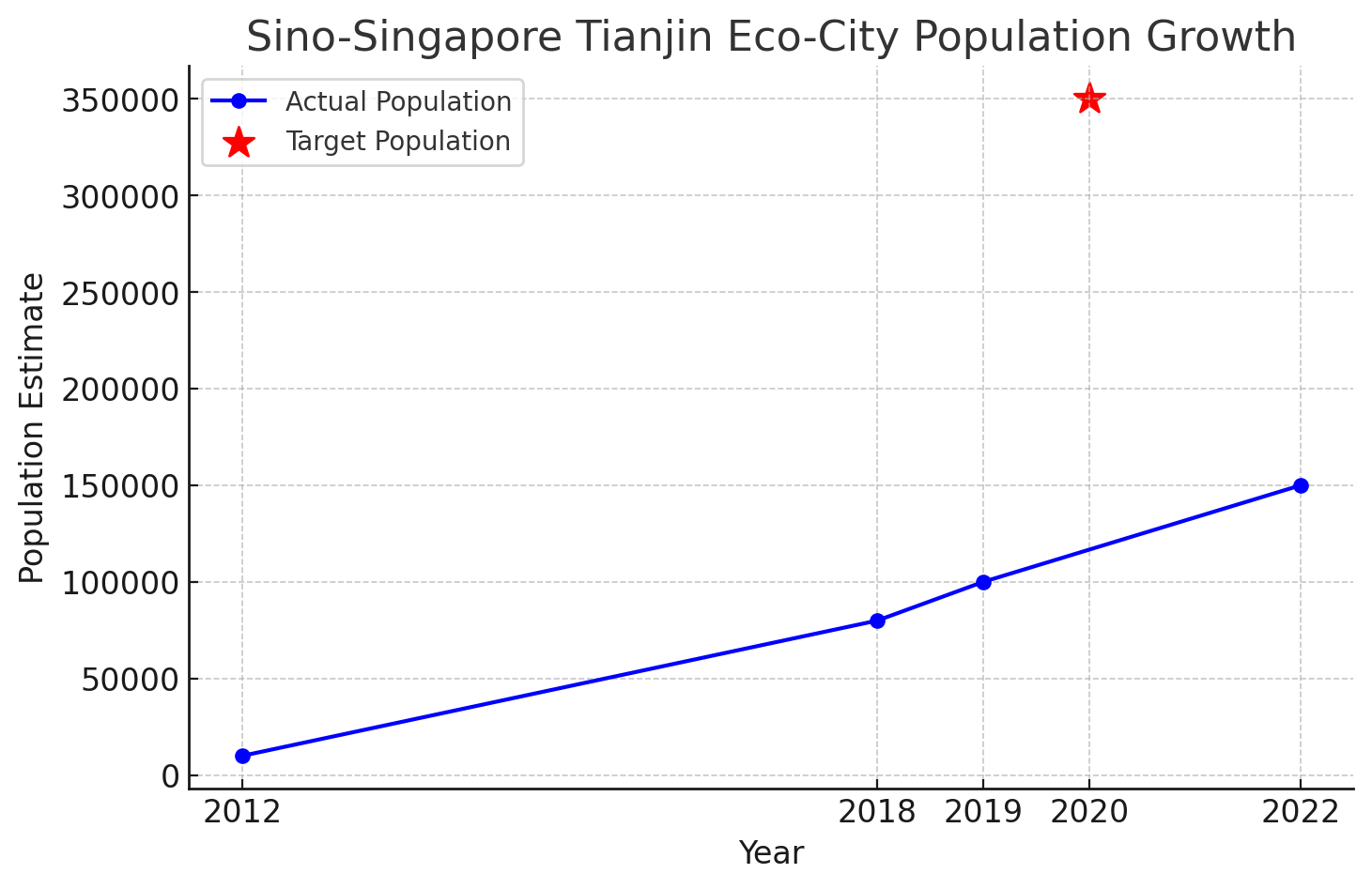
| Year--- | Event | Population Estimate |
|---|---|---|
| 2007 | Framework Agreement signed between Singapore and China | N/A |
| 2008 | Groundbreaking ceremony and commencement of construction | N/A |
| 2012 | Arrival of first residents | ~10,000 |
| 2013 | Completion of 8 sq km start-up area | N/A |
| 2018 | 10th anniversary; population reaches approximately 80,000 | ~80,000 |
| 2019 | Population grows to around 100,000 | ~100,000 |
| 2022 | Population estimated at over 150,000 | ~150,000 |
| 2020 | Target population projection | ~350,000 |
DISCLAIMER: The information presented across New Cities Atlas reflects approximate understandings of each city's development status, population figures, statistics, and trajectory, compiled from publicly available sources. It should not be taken as verified or definitive fact. New city developments are, by their nature, a moving target, and information is often scarce, frequently imprecise, and subject to rapid change as projects evolve, stall, accelerate, or are revised entirely. We are doing our best to build as comprehensive and accurate a picture as we can of a phenomenon that resists easy documentation, and we appreciate your understanding of the inherent limitations in that effort.
If you have up-to-date information about any of the cities featured here and would like to help us improve our coverage, we would genuinely welcome hearing from you. Reach us at newcitiesatlas@gmail.com.