Rawabi
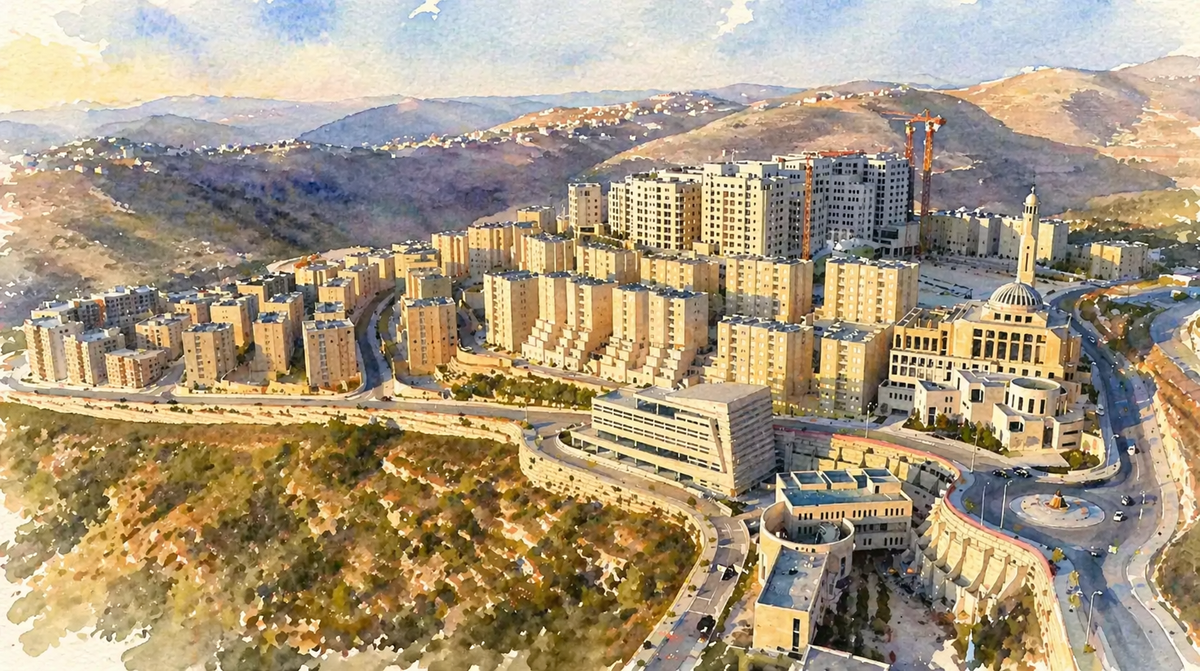
Rawabi, located in the West Bank, is the first planned Palestinian city, designed as a modern, high-tech urban hub. Developed by the Bayti Real Estate Investment Company with support from Qatar, it aims to house 40,000 residents, featuring residential neighborhoods, commercial centers, schools, and entertainment venues. The city was envisioned to provide economic opportunities, focusing on tech, entrepreneurship, and service industries. However, political tensions, restrictions on infrastructure access, and funding challenges have slowed its growth. Despite this, Rawabi represents a symbol of Palestinian resilience and urban ambition, offering modern housing, smart city infrastructure, and a vision for sustainable development in a region historically constrained by political and economic challenges.
Rawabi is mostly a frontier new city. It is a privately developed, master-planned city built largely from scratch in the West Bank, rather than an extension of an existing urban area or a contained district within one. Conceived to provide modern housing, jobs, and a new urban lifestyle, it introduces a distinct economic and social node within West Bank. While its scale is smaller than many state-led new capitals, its intent is similar: to create a self-sufficient, fully realized urban environment with its own identity and infrastructure. Unlike incremental expansion, Rawabi represents a deliberate effort to establish a new city anchored in private-sector initiative and long-term national aspirations.
Rawabi scores in a middle position on the Momentum Index because it represents a real and meaningful urban achievement, but one that remains only partially fulfilled. Unlike many heavily marketed new-city concepts that never move beyond renderings, Rawabi is a built place with residents, neighborhoods, services, and a recognizable civic identity. It has succeeded in proving that a new Palestinian city can physically take shape and attract real life on the ground.
At the same time, Rawabi has not yet become a fully self-sustaining urban success on the level of the strongest global examples. Its growth has been constrained by forces beyond design alone, including broader political, economic, and infrastructural limits that have made it harder for the city to expand at the pace and scale originally imagined. That matters on the Momentum Index, which measures not just whether a city exists, but how fully it has realized its vision, economic role, and urban energy.
So Rawabi lands in the middle tier as more substantial than a stalled or ghost-city project, but still short of full ignition. It stands as a serious partial success, shaped as much by external constraint as by its own ambitions.
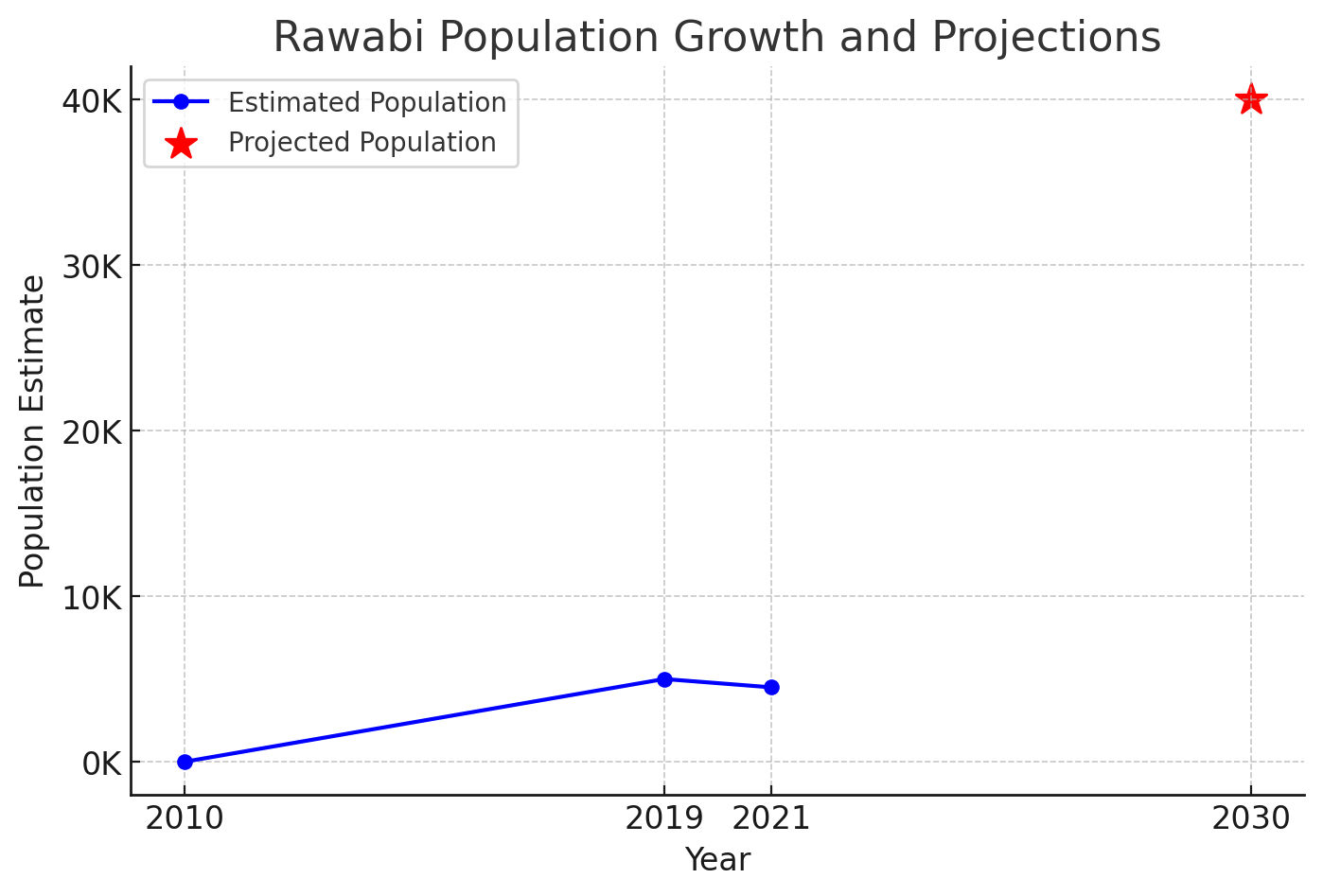
| Year | Population Estimate |
|---|---|
| 2010 | 0 |
| 2019 | ~5,000 (employees) |
| 2021 | 767 - 4,500 |
| 2030 | 25,000 - 40,000 |