New Cairo
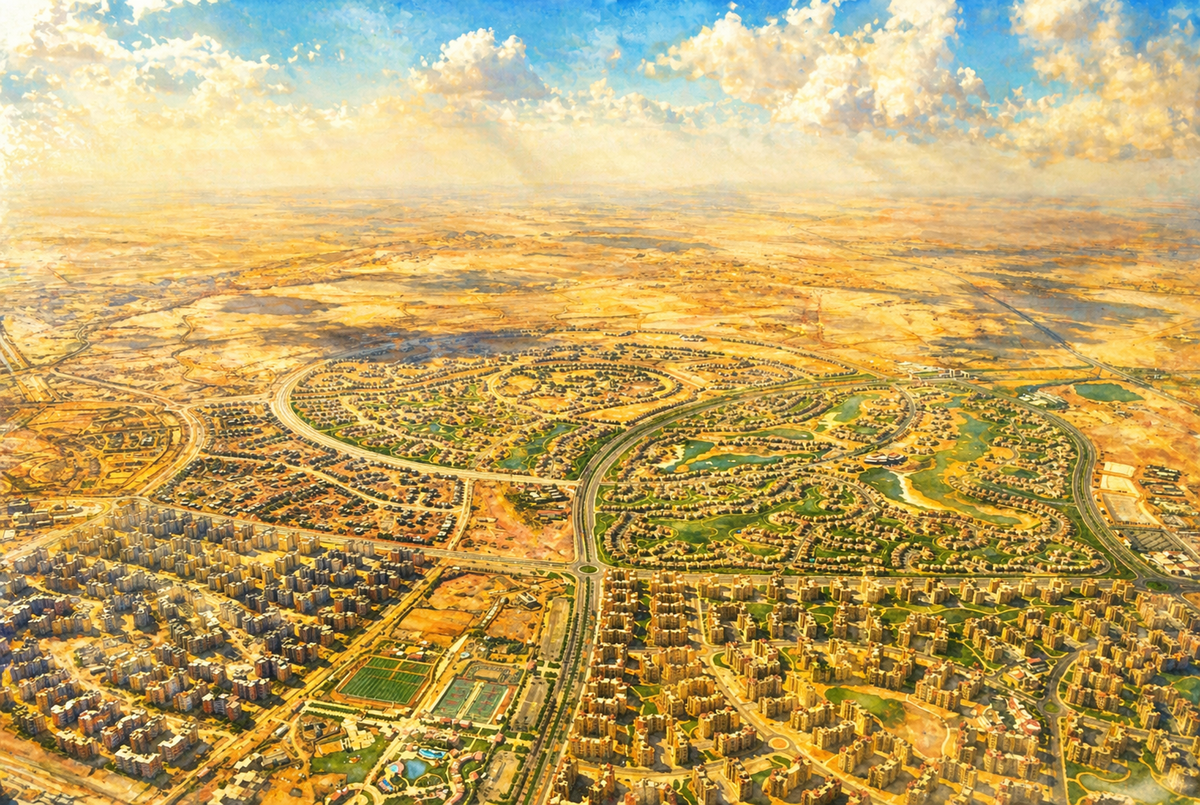
New Cairo is a planned city located 20 kilometers east of Cairo, Egypt, developed to ease the pressure on the overcrowded and congested capital. Established in 2000, it is part of Egypt’s broader urban expansion strategy and aims to accommodate both residential and commercial growth. New Cairo features modern infrastructure, including luxury housing, business districts, educational institutions, and medical centers. Notably, it is home to the prestigious American University in Cairo (AUC) campus and many upscale residential communities. The city was built to offer a high-quality living environment with green spaces, wide roads, and improved traffic management. While still growing, New Cairo serves as an important urban development project, easing congestion in central Cairo while fostering economic and social growth.
New Cairo is technically a new city, though it is closely integrated with Cairo’s metropolitan area. Established in 2000, it was developed as a planned urban area to alleviate the congestion and overpopulation in central Cairo. Unlike a district, which is an extension of an existing city, New Cairo was conceived as a self-contained urban area with residential, commercial, and educational zones, including the American University in Cairo (AUC).
While it functions as part of the larger Greater Cairo region, New Cairo has its own municipal governance and infrastructure, positioning it as a new city rather than just a district. Its development has expanded over the years, with plans to continue growing as a highly livable urban center on the outskirts of Cairo.
New Cairo has successfully evolved into a bustling residential, academic, and commercial district. While it lacks some of the mixed-income diversity and public transit infrastructure of a fully integrated urban environment, it is widely considered a highly successful planned expansion of greater Cairo.
Strengths:
- Well-Established Residential District – New Cairo has grown rapidly, becoming one of Cairo’s most affluent and sought-after suburbs, home to over 2 million residents.
- Proximity to Cairo – Located just east of central Cairo, it offers less congestion, more green spaces, and higher-quality housing, while remaining connected to the urban core.
- Thriving Educational and Business Institutions – New Cairo hosts several top universities, including The American University in Cairo (AUC), along with corporate offices, tech parks, and high-end malls, fostering a vibrant economic environment.
- High-Quality Infrastructure – The city is known for organized roads, gated communities, and well-maintained utilities, making it a preferred destination for upper-middle-class and wealthy Egyptians.
- Sustained Growth and Demand – New Cairo’s real estate market remains in high demand, with a steady influx of new developments and investments.
Challenges:
- Limited Public Transportation – New Cairo’s reliance on private cars and limited public transit options makes commuting more challenging, especially for those without access to personal vehicles.
- Affordability and Socioeconomic Diversity – New Cairo caters primarily to wealthier residents, resulting in limited housing options for lower-income groups, which affects urban diversity.
- Environmental and Urban Sprawl Concerns – Rapid growth has led to increased car dependency, contributing to congestion in certain areas and raising questions about long-term environmental sustainability.
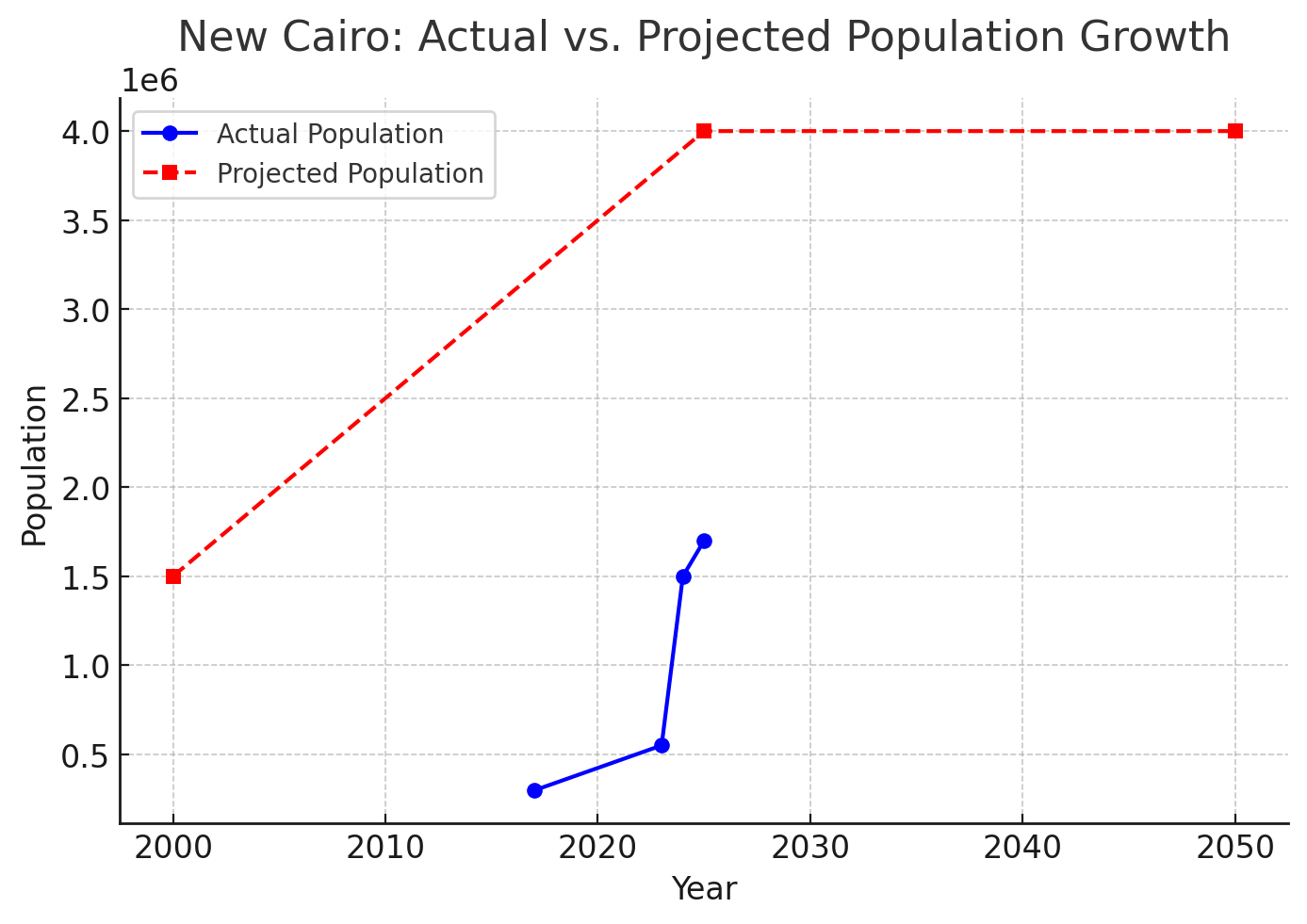
| Year | Actual Population | Projected Population |
|---|---|---|
| 2017 | 297,387 | - |
| 2023 | 550,000 | - |
| 2024 | 1,500,000 | - |
| 2025 | 1,700,000 | - |
| Initial Projection | - | 1,500,000 |
| Target | - | 4,000,000 |
DISCLAIMER: The information presented across New Cities Atlas reflects approximate understandings of each city's development status, population figures, statistics, and trajectory, compiled from publicly available sources. It should not be taken as verified or definitive fact. New city developments are, by their nature, a moving target, and information is often scarce, frequently imprecise, and subject to rapid change as projects evolve, stall, accelerate, or are revised entirely. We are doing our best to build as comprehensive and accurate a picture as we can of a phenomenon that resists easy documentation, and we appreciate your understanding of the inherent limitations in that effort.
If you have up-to-date information about any of the cities featured here and would like to help us improve our coverage, we would genuinely welcome hearing from you. Reach us at newcitiesatlas@gmail.com.