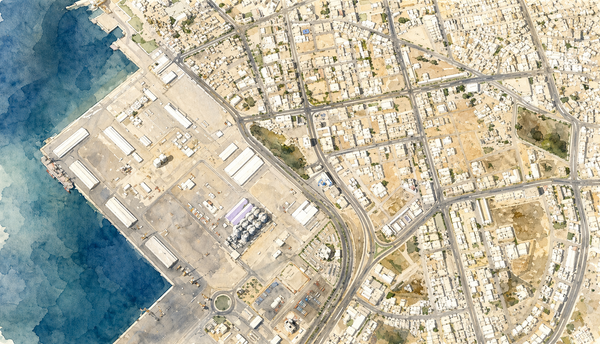
Masdar City
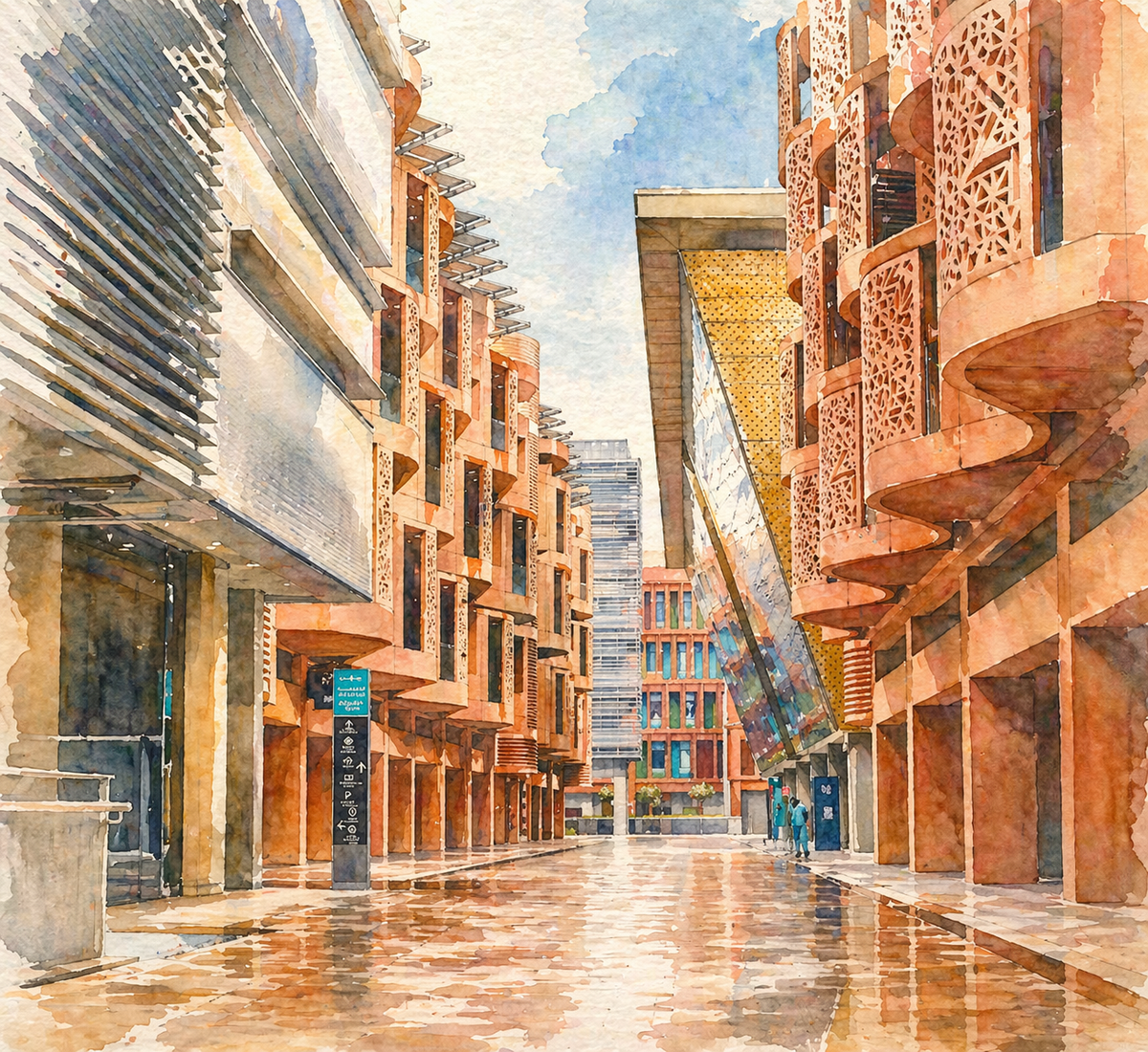
Masdar City, located near Abu Dhabi, UAE, is one of the world’s most ambitious sustainable urban developments. Launched in 2008, it was designed as a carbon-neutral, zero-waste city, powered by renewable energy, particularly solar. The city features energy-efficient buildings, smart water management, and an autonomous Personal Rapid Transit (PRT) system. Initially planned to house 50,000 residents and 1,500 businesses, Masdar has faced delays and scaled-back ambitions, with only parts of the city completed. However, it remains a global hub for sustainability research, hosting Masdar Institute, clean energy firms, and pilot projects in green technology. While it hasn’t fully realized its original vision, Masdar City serves as an important testbed for sustainable urban planning and future eco-cities.
Masdar City is best understood as a large-scale district rather than a frontier new city or an urban expansion. Although it was initially envisioned as a fully self-sustaining, zero-carbon city, its development has been more limited and integrated into the broader metropolitan structure of Abu Dhabi. It has not evolved into an independent urban center with a diverse, self-sustaining economy or large resident population. Instead, it functions as a specialized hub focused on clean technology, research, and innovation. Unlike typical suburban growth, it was deliberately planned as a distinct enclave with a specific purpose. In this sense, Masdar operates as a thematic, institutionally anchored district within a larger city rather than a standalone urban entity.
Masdar City is not a ghost city, but it also clearly fell well short of its original mythos. The original concept was a near-zero-carbon, zero-waste city powered heavily by on-site renewables, but over time the project was scaled back and connected to the regular grid rather than fully operating as a self-contained carbon-neutral city. Why it still scores above the bottom tier: Masdar City does have real activity. It now reportedly hosts more than 1,300 companies and a combined working and residential population of around 15,000, with 600,000 square meters of operational buildings and more development underway. It also continues adding projects like Masdar City Square and positions itself as a growing free-zone business cluster. Why it does not score higher: for a project once sold as one of the world’s most radical urban experiments, the outcome is much more modest. Academic and industry commentary now tends to treat it as a place that produced useful lessons in green building and sustainable urbanism, but not as the fully realized breakthrough city once imagined.
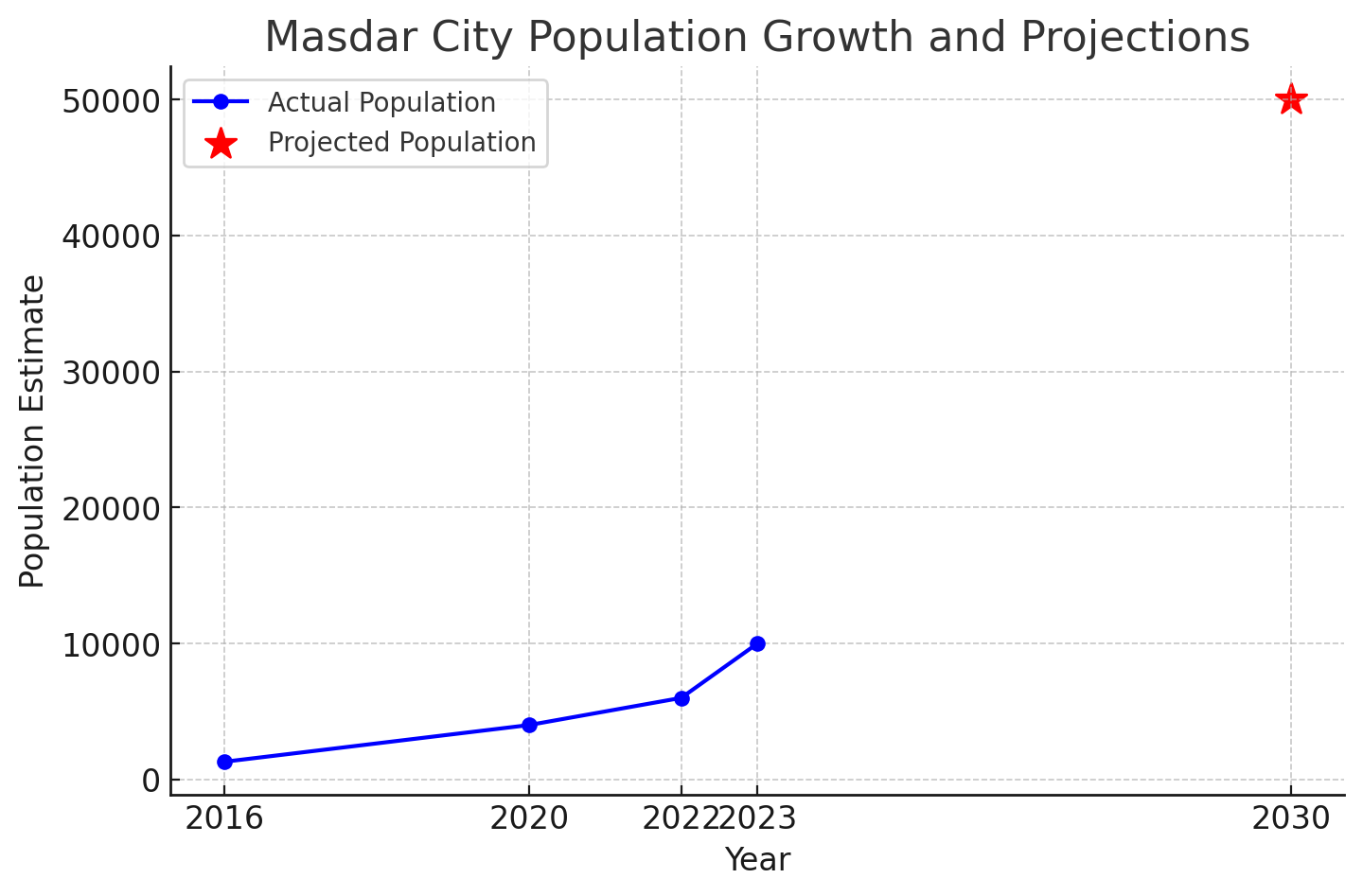
| Year | Event | Population Estimate |
|---|---|---|
| 2006 | Launch of Masdar City project | N/A |
| 2010 | Completion of first six buildings | N/A |
| 2013 | Siemens Middle East HQ opens | N/A |
| 2016 | Population reaches approximately 1,300 residents | ~1,300 |
| 2020 | Population grows to over 4,000 residents | ~4,000 |
| 2022 | Population surpasses 6,000 residents | ~6,000 |
| 2023 | Projected population | ~10,000 |
| 2030 | Target population upon project completion | ~50,000 |
DISCLAIMER: The information presented across New Cities Atlas reflects approximate understandings of each city's development status, population figures, statistics, and trajectory, compiled from publicly available sources. It should not be taken as verified or definitive fact. New city developments are, by their nature, a moving target, and information is often scarce, frequently imprecise, and subject to rapid change as projects evolve, stall, accelerate, or are revised entirely. We are doing our best to build as comprehensive and accurate a picture as we can of a phenomenon that resists easy documentation, and we appreciate your understanding of the inherent limitations in that effort.
If you have up-to-date information about any of the cities featured here and would like to help us improve our coverage, we would genuinely welcome hearing from you. Reach us at newcitiesatlas@gmail.com.