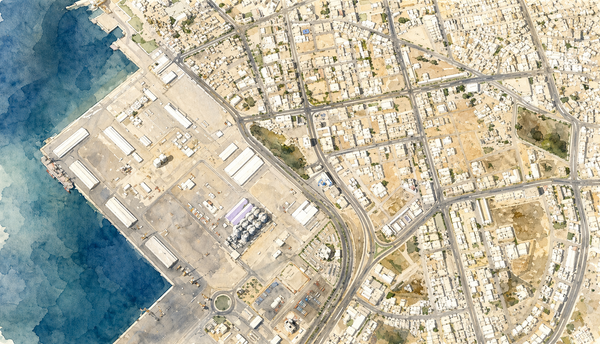
Dholera Smart City
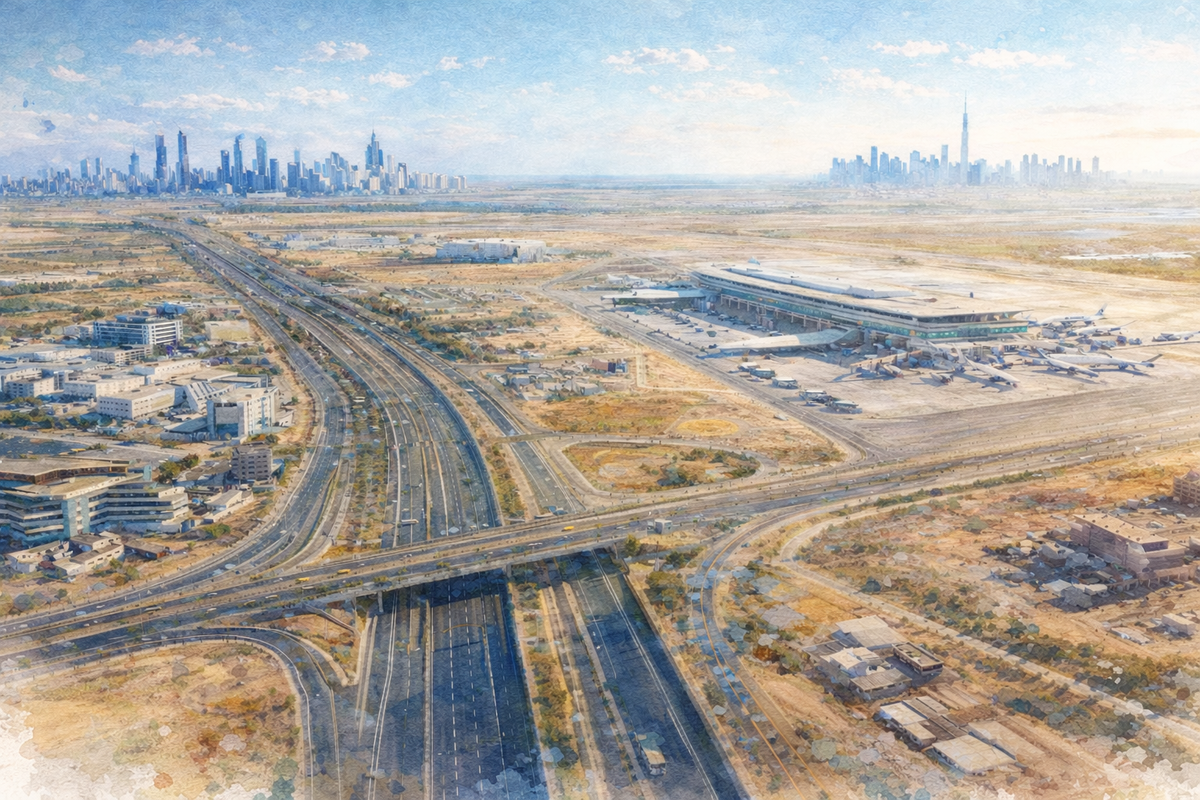
Most people have never heard of Dholera. That's not surprising because it doesn't exist yet. But if India's ambitions are realized, it will. Carved out of 920 square kilometers of largely undeveloped land in Gujarat, Dholera is India's first "greenfield smart city": a government-planned urban hub being built from scratch under the Delhi-Mumbai Industrial Corridor, engineered to be self-sustaining before its first permanent resident ever moves in. Intelligent traffic systems, water recycling infrastructure, a new international airport, renewable energy, the whole blueprint. The vision is less a city than a proposition: that India can manufacture, from raw earth and political will, a world-class industrial and residential metropolis capable of competing for the global businesses and manufacturing investment that will define which economies win the 21st century.
Whether it can deliver is another question. Land acquisition has moved slowly, infrastructure rollout has lagged behind ambition, and attracting early investors to a city that doesn't yet have critical mass is the classic chicken-and-egg problem that has bedeviled planned cities the world over. But the underlying logic is hard to argue with. India is urbanizing at a pace that its existing cities cannot absorb, and the alternative to building new ones by cramming ever more people into the infrastructure of the old ones is not a plan, it's a slow-motion crisis. If Dholera gets there, it won't just be a city. It will be the template.
Dholera is a true new city, not just a district. It is being developed as India’s first greenfield smart city, built from scratch under the Delhi-Mumbai Industrial Corridor (DMIC). Unlike an urban district, which expands an existing city, Dholera is planned as a self-sustaining urban center with residential, commercial, industrial, and technological zones across 920 square kilometers.
Designed as a high-tech, eco-friendly city, Dholera integrates smart infrastructure, renewable energy, and transit-oriented development, including a dedicated airport and metro system. Though still in early phases, it is expected to become a major industrial and logistics hub. Its success will depend on infrastructure investment, economic demand, and population growth, but it is fundamentally a new city development.
Dholera hasn’t failed, but it hasn’t ignited yet either. If industries, residents, and investors commit, it could become India’s first true smart city, but as of now, it remains a long-term experiment in urban planning.
Strengths:
- Dholera is the flagship project of India’s Delhi-Mumbai Industrial Corridor (DMIC), designed to be a high-tech, sustainable urban and industrial hub.
- Backed by the Indian government and Gujarat state, with ongoing investment in infrastructure, transport, and utilities.
- The city is attracting early-stage investments in manufacturing, logistics, and technology, with a dedicated Special Investment Region (SIR).
- Features wide roads, a smart grid, an international airport in development, and connectivity via expressways and high-speed rail.
Challenges:
- Still Largely Underpopulated: Despite infrastructure progress, Dholera remains mostly uninhabited, as industries and businesses have yet to fully relocate.
- Slow Pace of Private Investment: While the government is building the city, private-sector interest is taking longer than expected, slowing economic activity.
- Comparison to Other Indian Cities: Unlike Ahmedabad or Bengaluru, Dholera lacks an established talent and corporate ecosystem, making it harder to compete.
- Skepticism & Delayed Timelines: Critics argue that Dholera is overhyped and that its transformation into a fully functioning city could take decades.
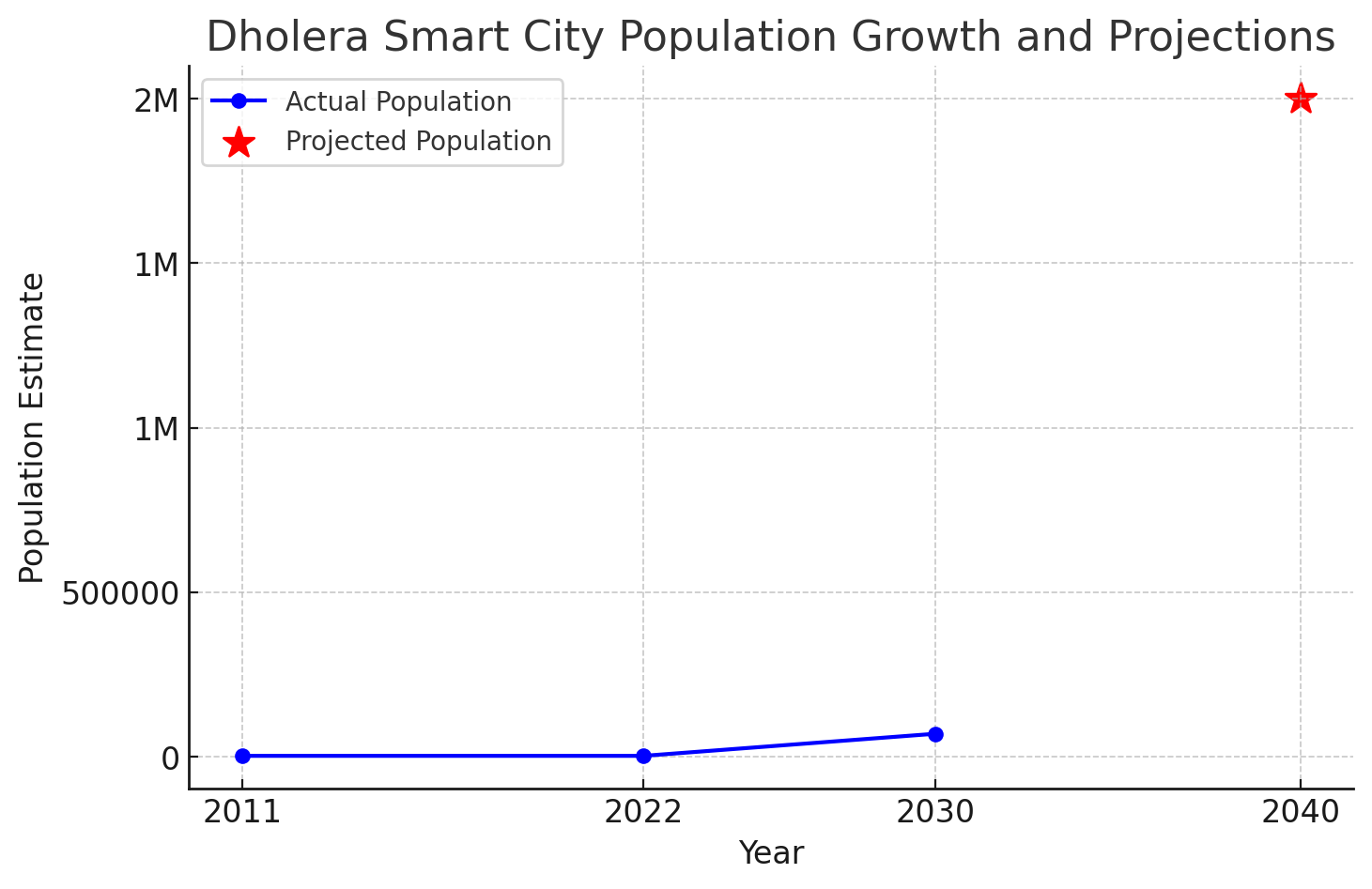
| Year | Population Estimate |
|---|---|
| 2011 | 2,779 |
| 2022 | 2,776 |
| 2030 | ~70,000 |
| 2040 | ~2,000,000 |
DISCLAIMER: The information presented across New Cities Atlas reflects approximate understandings of each city's development status, population figures, statistics, and trajectory, compiled from publicly available sources. It should not be taken as verified or definitive fact. New city developments are, by their nature, a moving target, and information is often scarce, frequently imprecise, and subject to rapid change as projects evolve, stall, accelerate, or are revised entirely. We are doing our best to build as comprehensive and accurate a picture as we can of a phenomenon that resists easy documentation, and we appreciate your understanding of the inherent limitations in that effort.
If you have up-to-date information about any of the cities featured here and would like to help us improve our coverage, we would genuinely welcome hearing from you. Reach us at newcitiesatlas@gmail.com.