California Forever
There is something quintessentially Silicon Valley about California Forever. The audacity of the vision, the secretive land acquisition, the billionaire backers who apparently looked at the most politically complicated development environment in the United States and decided that what was needed was more ambition, not less. Flannery Associates spent years quietly buying up 55,000 acres of Solano County farmland between San Francisco and Sacramento before anyone fully understood what they were assembling. That's either a masterclass in strategic patience or a case study in how not to build community trust before asking a community for something enormous. Probably both.
The pitch is seductive on its face. California has a housing crisis so severe and so self-inflicted that the idea of simply building a new city from scratch on open land has a certain clean logic to it. Decades of zoning obstruction, environmental litigation weaponized against construction, and a homeowner political class with a structural interest in keeping supply scarce have produced a state that cannot build its way out of its own mess. Why fight city by city, neighborhood by neighborhood, NIMBY by NIMBY, when you can just start over? The walkable neighborhoods, green energy, European-style urbanism, and actual affordable housing that California Forever is promising are precisely what California's existing cities have proven congenitally incapable of delivering to themselves.
The problem is that Solano County is not a blank canvas, and the people who live there were not consulted before the canvas was purchased. Agricultural land, water supply concerns, and a deep suspicion of tech-industry paternalism have generated exactly the kind of political resistance that no amount of slick branding fully overcomes. The sense that a group of San Francisco billionaires has decided it knows better than Central Valley farming communities how their land should be used is not an unreasonable read of the situation, and locals have not been shy about saying so. California Forever may well be a genuinely good idea wrapped in genuinely poor execution of the human side of city-building. Which is a remarkably apt metaphor for Silicon Valley's relationship with the rest of California.
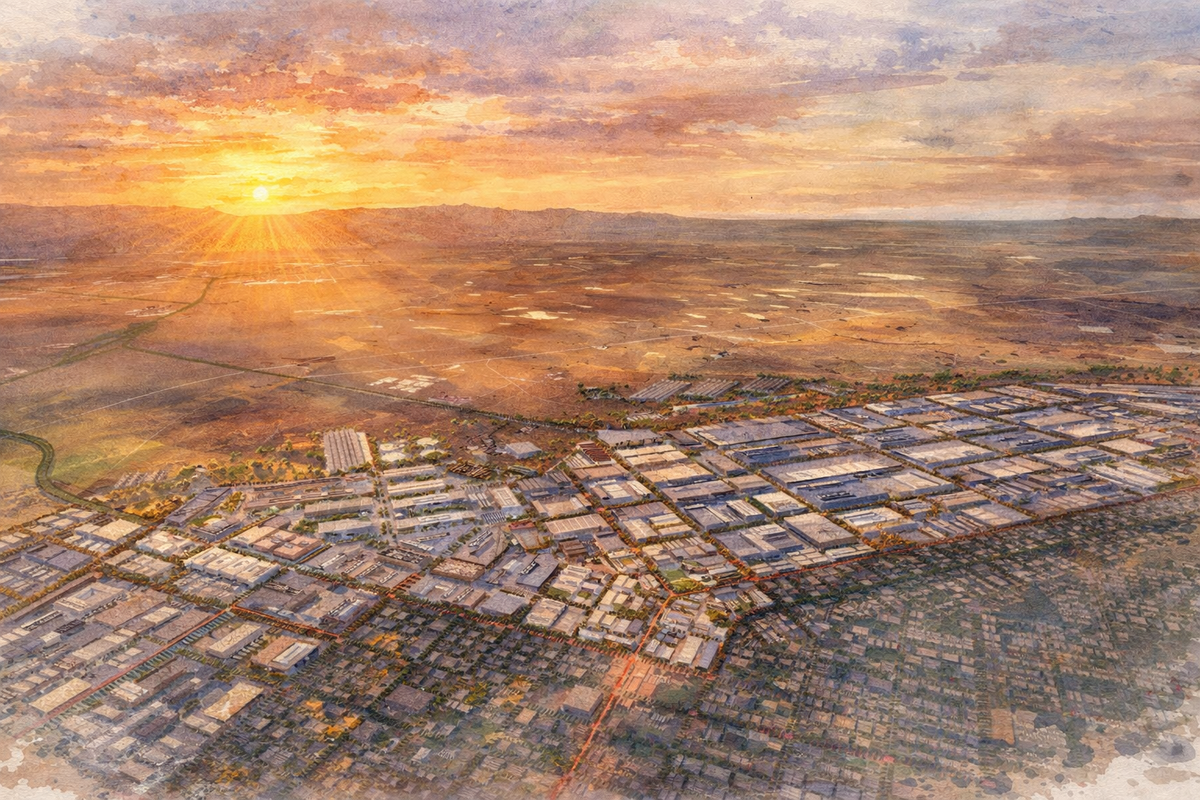
California Forever is intended to be a new city, not just a district, but it is still in the early planning stages and faces significant challenges. Proposed by Flannery Associates, it aims to develop a self-sustaining, walkable urban community on 55,000 acres of farmland in Solano County, California, between San Francisco and Sacramento.
California Forever seeks to create a brand-new urban settlement from scratch, with housing, businesses, public transit, and green energy infrastructure. However, it has not yet secured zoning approvals or widespread local support, and its feasibility remains uncertain. If realized, it could be one of the largest new city developments in the U.S.
California Forever has shifted from speculative land assembly to a more structured, public-facing planning phase, and for this reason we have recently upgraded its status on the momentum index. The team recently unveiled a detailed small area plan for its initial development zone near Rio Vista, outlining a compact, walkable community with a defined town center, mixed-use blocks, and phased housing delivery. The plan emphasizes early infrastructure, including utilities and mobility networks, to ground the vision in implementable steps. Politically, the project remains contested, with local resistance and the withdrawal of the original countywide ballot initiative forcing a more incremental approvals strategy. Overall, it has moved from bold concept to cautious, staged entitlements effort.
Strengths:
- Well-Funded Vision: The project has major financial backing from Silicon Valley billionaires, giving it resources that most speculative cities lack.
- Proximity to the Bay Area: Unlike remote ghost cities, California Forever is near San Francisco and Sacramento, making it theoretically viable if executed well.
- Political Engagement is Underway: The project has shifted from secrecy to public engagement and a ballot measure, showing some early steps toward real-world progress.
Challenges:
- It’s Not a City Yet: Unlike other planned cities, California Forever is still just land. There is no infrastructure, no residents, and no official approval to build.
- Huge Political & Legal Hurdles: The plan faces intense local opposition, water rights issues, and zoning restrictions that could block it entirely.
- No Clear Economic Anchor: Unlike Shenzhen or even King Abdullah Economic City (KAEC), California Forever has no specific industry or financial driver, relying instead on vague promises of "good urbanism."
- Past Silicon Valley Urban Projects Have Flopped: Similar billionaire-led urban experiments, like Sidewalk Labs in Toronto, failed due to regulatory hurdles and lack of local buy-in.
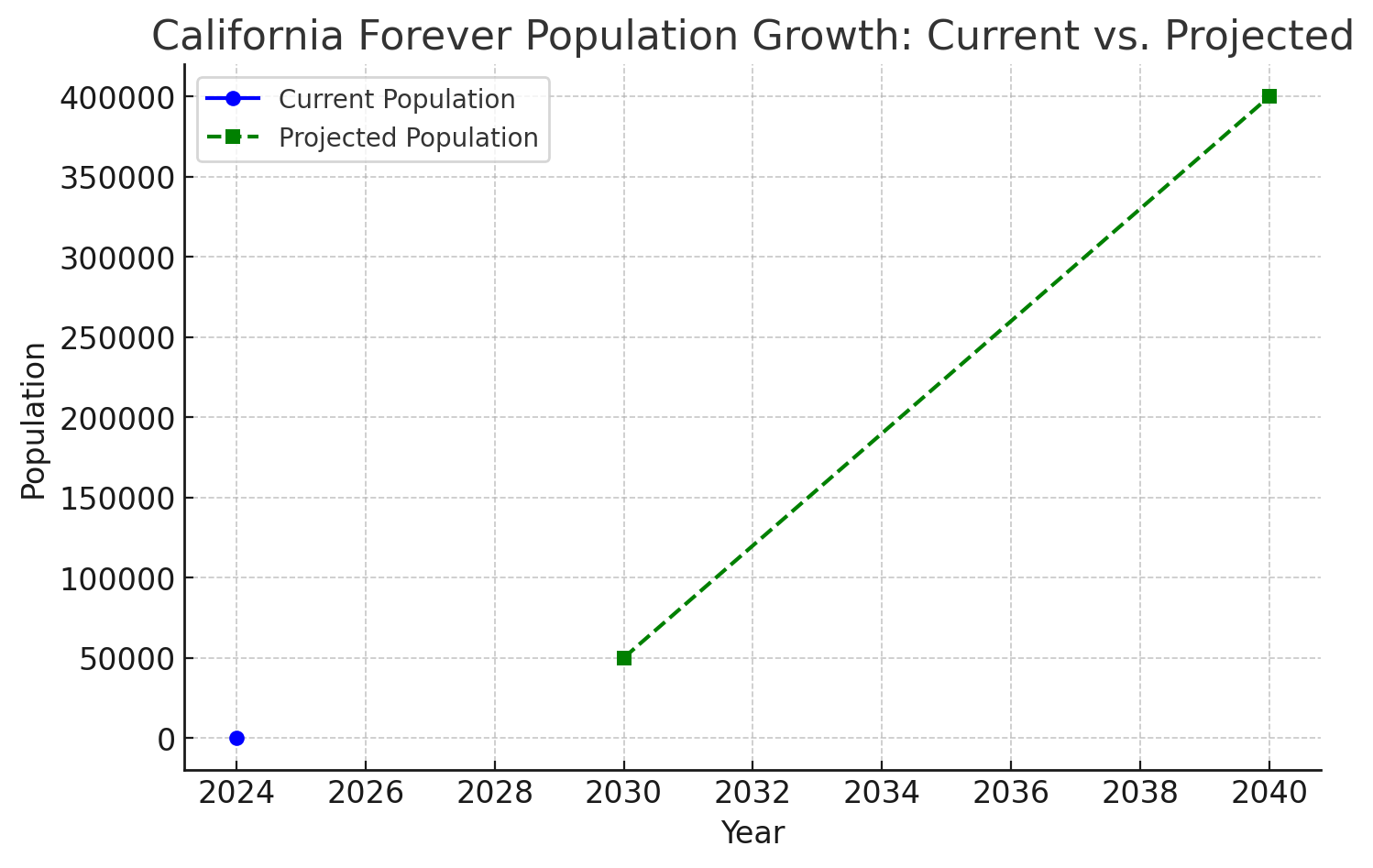
| Year | Projected Population |
|---|---|
| 2030 | 50,000 |
| 2040 | 400,000 |
DISCLAIMER: The information presented across New Cities Atlas reflects approximate understandings of each city's development status, population figures, statistics, and trajectory, compiled from publicly available sources. It should not be taken as verified or definitive fact. New city developments are, by their nature, a moving target, and information is often scarce, frequently imprecise, and subject to rapid change as projects evolve, stall, accelerate, or are revised entirely. We are doing our best to build as comprehensive and accurate a picture as we can of a phenomenon that resists easy documentation, and we appreciate your understanding of the inherent limitations in that effort.
If you have up-to-date information about any of the cities featured here and would like to help us improve our coverage, we would genuinely welcome hearing from you. Reach us at newcitiesatlas@gmail.com.