Africa
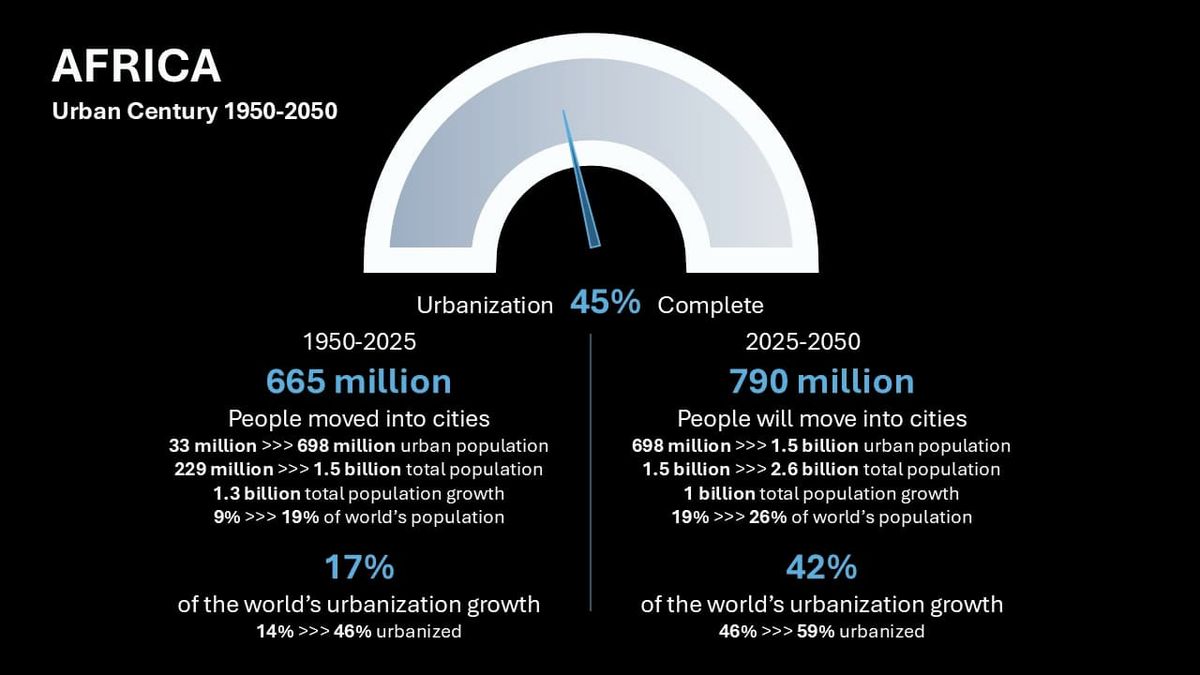
The scale of what is about to happen in Africa's cities is difficult to fully absorb. The continent's population will double to 2.5 billion by 2050, and it won't stop there. By the end of the century, Africa will rival Asia as the most populous place on earth, and the overwhelming majority of that growth will pour into urban centers that, in many cases, are already straining under the weight of what they have now. The question facing the continent isn't whether its cities will grow. That's settled. The question is whether they'll be built for it.
A wave of planned city projects suggests that at least some of Africa's leaders are asking that question seriously. Nigeria's Eko Atlantic is positioning itself as a regional financial capital, reclaimed literally from the ocean off the Lagos coast. Kenya's Konza Technopolis is making a run at being the continent's answer to Silicon Valley. Ghana's Hope City has similar ambitions in the tech space. Egypt, facing a Cairo that has swelled beyond any reasonable capacity to govern it, is building an entirely new capital from scratch east of the old one. Senegal is doing the same with Diamniadio. The ambition, taken together, is staggering.
Whether the execution matches it is the open question, and history offers reasons for both optimism and caution. Infrastructure deficits, governance failures, and the perennial problem of affordability: building gleaming new cities that ordinary Africans can neither access nor afford have tripped up planned city projects the world over, and Africa is not immune. But the underlying demographic pressure is real, and it isn't going away. A continent that gets this right will have built the urban architecture for the most consequential population story of the 21st century. One that gets it wrong will have simply made the crisis harder to solve.