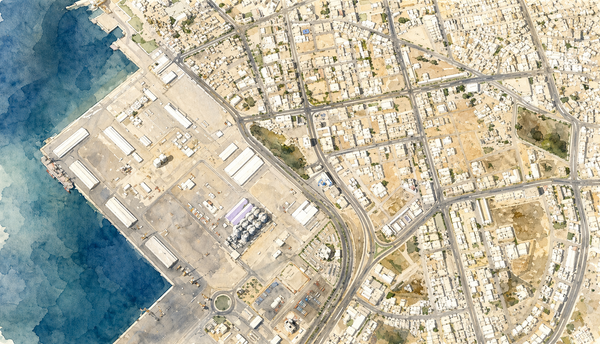
Navi Mumbai
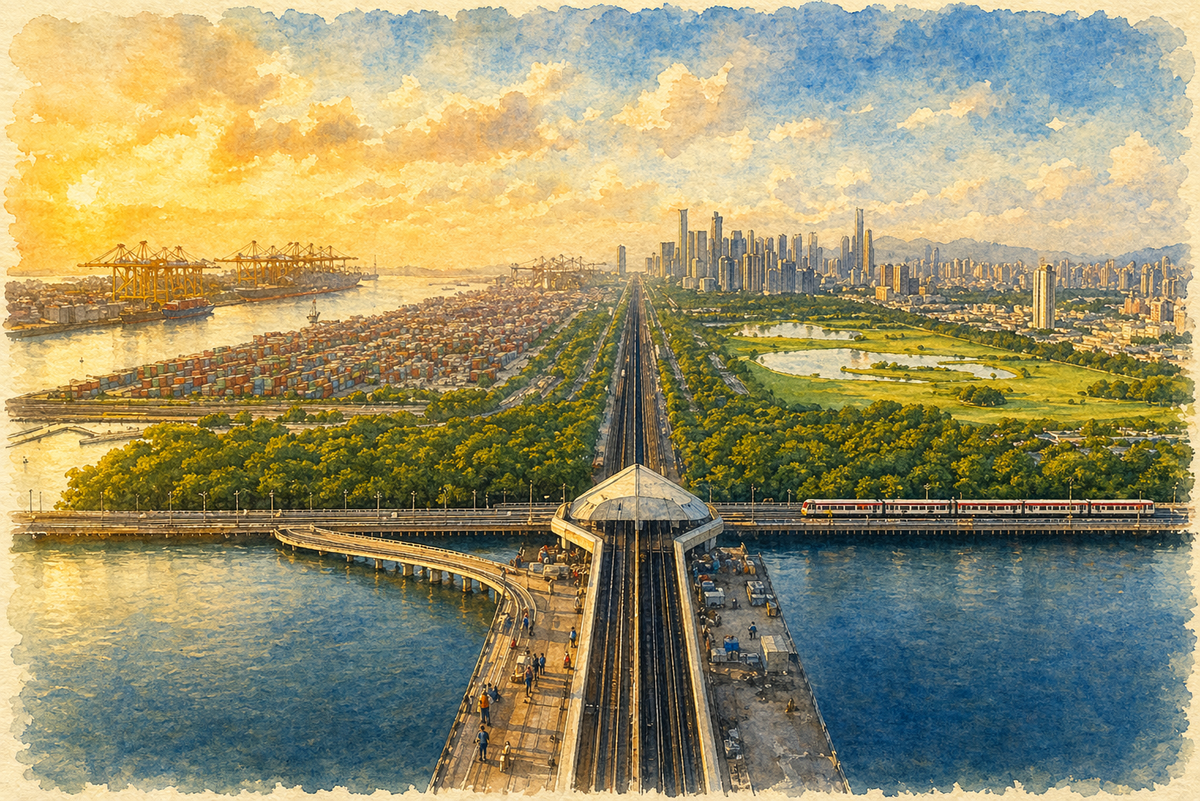
Navi Mumbai, developed in 1972, is a planned satellite city of Mumbai, designed to decongest the overcrowded metropolis and provide a modern, well-planned urban alternative. Spanning 344 square kilometers, it was developed by CIDCO (City and Industrial Development Corporation of Maharashtra) and features organized residential zones, business districts, and industrial areas. Unlike unplanned urban sprawl, Navi Mumbai has wide roads, green spaces, and efficient infrastructure, making it one of India’s most successful planned cities. It hosts IT hubs, educational institutions, and a growing commercial sector, with upcoming projects like Navi Mumbai International Airport further boosting its significance. While still dependent on Mumbai for economic opportunities, Navi Mumbai continues to evolve as a self-sufficient, livable urban center.
Navi Mumbai is a true new city, not just a district. Planned in 1972 by CIDCO (City and Industrial Development Corporation of Maharashtra), it was designed as a satellite city to decongest Mumbai and create a self-sustaining urban center. Spanning 344 square kilometers, Navi Mumbai was built from scratch across the eastern coast of Mumbai, incorporating planned residential, commercial, and industrial zones.
Unlike a district, which would be part of an existing city, Navi Mumbai has independent municipal governance, led by the Navi Mumbai Municipal Corporation (NMMC). While it remains economically linked to Mumbai, Navi Mumbai is a distinct, well-planned urban entity, making it one of India’s most successful new city developments.
Navi Mumbai has successfully transitioned from a satellite city into a thriving, livable metropolis, proving that large-scale urban planning can work in India. While not yet fully independent from Mumbai, it is one of the most functional and economically successful new cities in the world.
Strengths:
- One of the Most Successful Planned Cities in India – Conceived in the 1970s to decongest Mumbai, Navi Mumbai has grown into a self-sustaining urban hub with over 1.5 million residents.
- Strong Infrastructure & Connectivity – Well-planned roads, the Mumbai suburban rail network, and upcoming metro and airport projects ensure excellent mobility.
- Thriving Economic & Business Districts – Navi Mumbai hosts IT parks, corporate hubs, and industrial zones, attracting companies and skilled professionals.
- High Quality of Life – Compared to overcrowded Mumbai, Navi Mumbai offers better housing, green spaces, and a more organized urban layout.
- Continuous Expansion & Private Investment – Real estate demand remains high, with new developments, malls, and commercial centers constantly emerging.
Challenges:
- Still Reliant on Mumbai – Despite growth, many residents commute to Mumbai for jobs, meaning it hasn’t fully replaced Mumbai as an independent economic powerhouse.
- Infrastructure Struggles to Keep Up – As the population booms, challenges like traffic congestion and overburdened utilities are emerging.
- Delays in Key Projects – The long-delayed Navi Mumbai International Airport is a major roadblock in reaching its full economic potential.
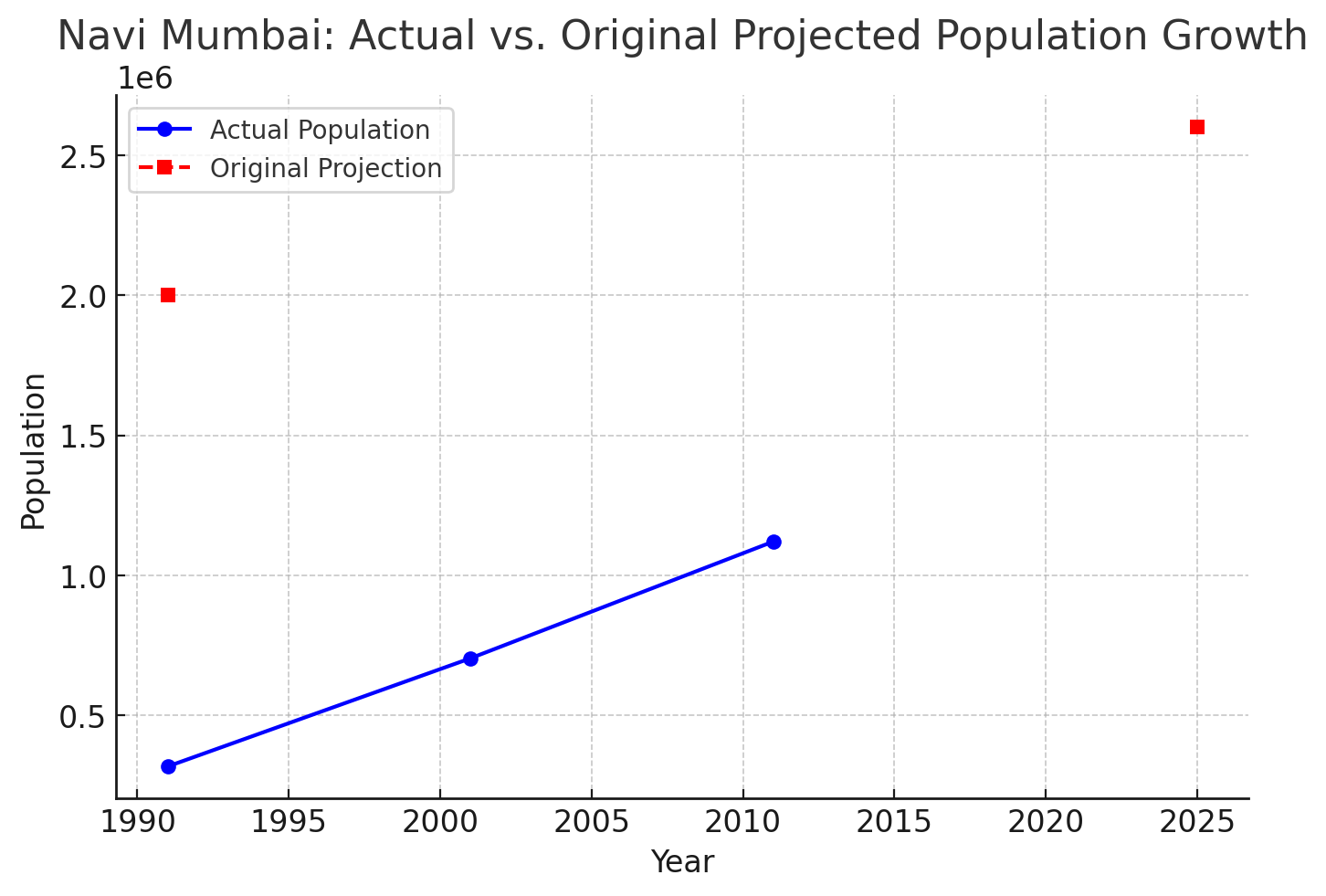
| Year | Population |
|---|---|
| 1991 | 318,000 |
| 2001 | 704,000 |
| 2011 | 1,120,547 |
| 2025 | 2,600,000* |
DISCLAIMER: The information presented across New Cities Atlas reflects approximate understandings of each city's development status, population figures, statistics, and trajectory, compiled from publicly available sources. It should not be taken as verified or definitive fact. New city developments are, by their nature, a moving target, and information is often scarce, frequently imprecise, and subject to rapid change as projects evolve, stall, accelerate, or are revised entirely. We are doing our best to build as comprehensive and accurate a picture as we can of a phenomenon that resists easy documentation, and we appreciate your understanding of the inherent limitations in that effort.
If you have up-to-date information about any of the cities featured here and would like to help us improve our coverage, we would genuinely welcome hearing from you. Reach us at newcitiesatlas@gmail.com.