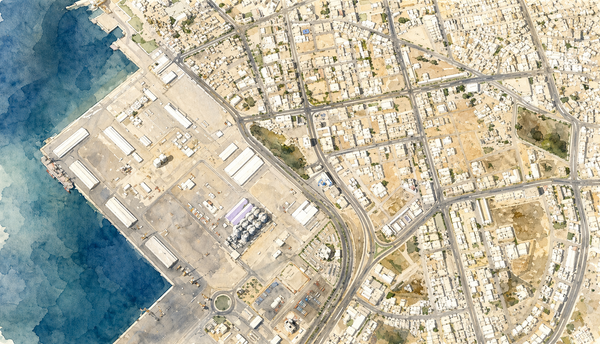
Lagos
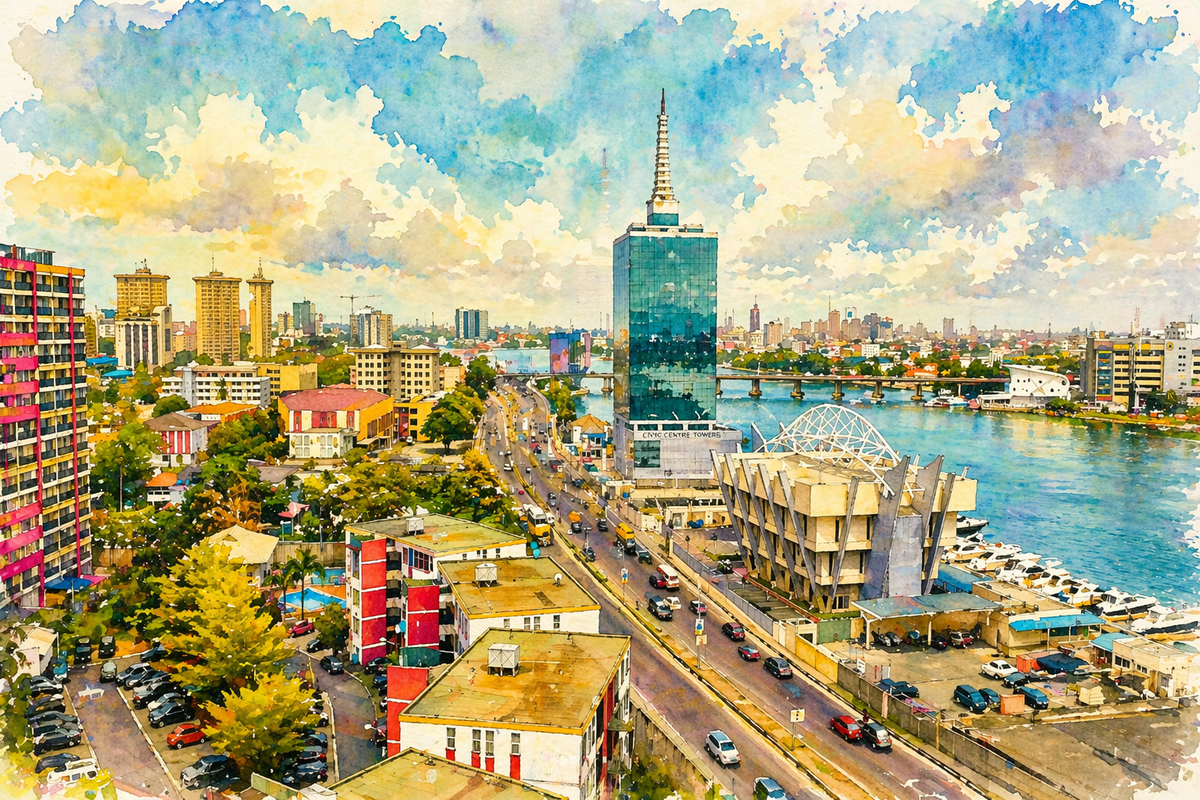
Lagos, Africa’s largest city and economic powerhouse, is a fast-growing megacity with over 20 million residents. As Nigeria’s commercial hub, it drives finance, technology, and trade, anchored by its bustling ports and markets.
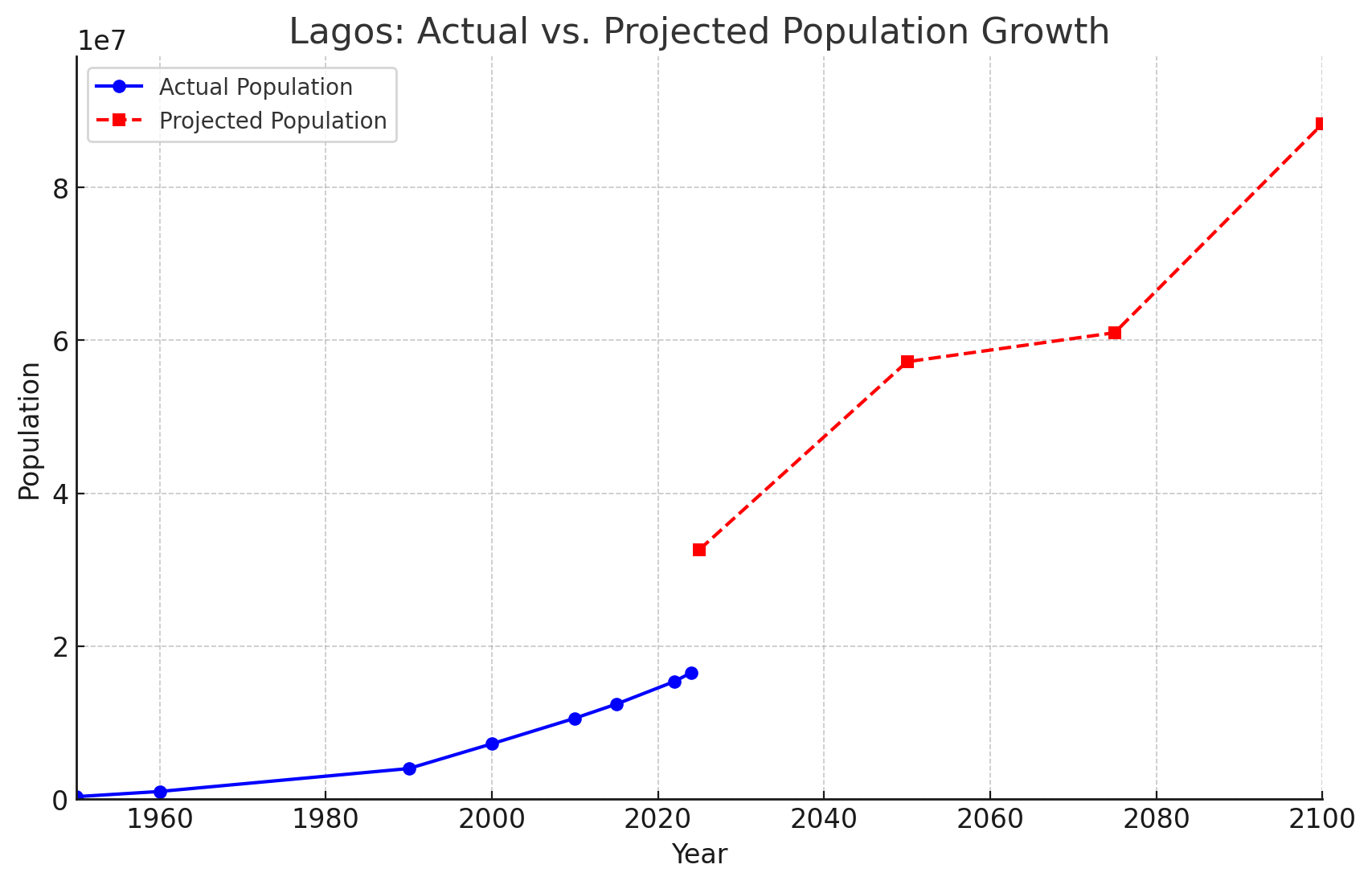
As Nigeria transitions from a rural to urban population while sustaining a high birth rate, Lagos is projected to experience massive population growth, reaching over 80 million people by 2100. The city's rapid expansion is driven by its thriving port, financial sector, and growing tech industry, making it a magnet for job seekers and entrepreneurs. This growth will continue to fuel Lagos' status as a major economic, cultural, and political hub in Africa. Lagos is already one of the fastest-growing cities in the world.
Such rapid growth presents significant challenges, including overcrowding, insufficient infrastructure, and environmental sustainability. The city’s infrastructure—particularly in terms of housing, transportation, and sanitation—is under immense strain. Flooding, traffic congestion, and the provision of basic services are major concerns. Planning for this growth is critical, requiring innovative solutions and large-scale investments to ensure Lagos remains livable and continues to drive Nigeria's economic development.
In response, major urban developments like Eko Atlantic, a luxury waterfront city built on reclaimed land, and Lekki Free Zone, an industrial and tech hub, aim to modernize Lagos and attract investment. The city is also expanding its rail network and smart city initiatives to improve mobility and resilience. Despite its challenges, Lagos remains a dynamic, entrepreneurial city, shaping Africa’s urban future through innovation and economic growth.
| Year | Actual Population | Projected Population |
|---|---|---|
| 1950 | 325,218 | - |
| 1960 | ~1,000,000 | - |
| 1990 | ~4,000,000 | - |
| 2000 | 7,233,000 | - |
| 2010 | 10,578,000 | - |
| 2015 | 12,427,000 | - |
| 2022 | 15,388,000 | - |
| 2024 | 16,536,000 | - |
| 2025 | - | 32,630,000 |
| 2050 | - | 57,200,000 |
| 2075 | - | 61,000,000 |
| 2100 | - | 88,300,000 |
DISCLAIMER: The information presented across New Cities Atlas reflects approximate understandings of each city's development status, population figures, statistics, and trajectory, compiled from publicly available sources. It should not be taken as verified or definitive fact. New city developments are, by their nature, a moving target, and information is often scarce, frequently imprecise, and subject to rapid change as projects evolve, stall, accelerate, or are revised entirely. We are doing our best to build as comprehensive and accurate a picture as we can of a phenomenon that resists easy documentation, and we appreciate your understanding of the inherent limitations in that effort.
If you have up-to-date information about any of the cities featured here and would like to help us improve our coverage, we would genuinely welcome hearing from you. Reach us at newcitiesatlas@gmail.com.