Could Oman's Al Duqm Finally See Its Singapore Moment?

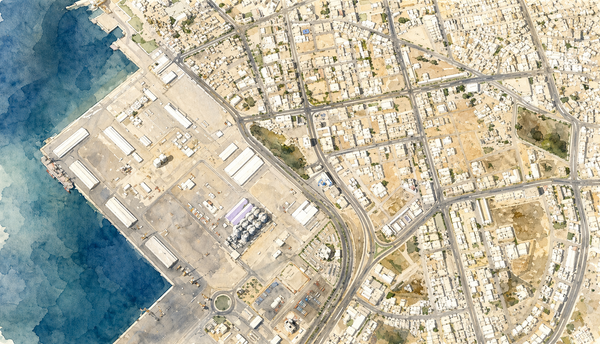
Fifteen years ago, Al Duqm was a fishing settlement on Oman's southeastern Arabian Sea coast with a population of around 6,000 people, a stretch of coastline and a geography that strategists had been quietly noting for years. Notably, it sat outside the Strait of Hormuz, on the open Arabian Sea, facing the Indian Ocean trade routes that connect Asia to Europe and Africa. When the Omani government established the Special Economic Zone at Duqm in 2011, the comparison that circulated in investment literature was Singapore: a small, strategically placed port that could become the pivot point of regional trade through sheer locational intelligence.
The comparison was always somewhat overcooked. Singapore's rise reflected a specific confluence of British colonial infrastructure, a multilingual trading culture, an exceptional technocratic government and a Cold War strategic environment that made it the obvious transshipment node between East and West. Al Duqm had strong geography, but the gap between those two asset bases was considerable.
What Al Duqm has today is more interesting than Singapore and more complicated than the masterplan ever anticipated: a project envisioned speculatively for a geopolitical scenario that just became real.
 Roger Weber
Read the rest of this piece on Capital Frontiers.